Benaras, Kashi, Varanasi, Avimukta. A city with many names, & one of them means the place Shiva has never abandoned. If you are an Indian, chances are you already know this place in Uttar Pradesh, on the Ganga, where people travel for the milestones of a life: naamkaran, mannats, a Ganga snaan to wash off your sins, pind daan, moksha prapti.
Excavations on the outskirts, at Aktha & at Ramnagar, have turned up settlements from around 1800 BCE, & the digs at Rajghat inside the city reach back to the 11th or 12th century BCE, which puts Varanasi in the same conversation as Rome & Athens & Jerusalem. It is a city that old, with plenty of secrets & mysteries in it, & still warm & welcoming to anyone who comes to pay a visit. Millions arrive every year looking for peace & for union with the divine, & go home carrying a little Benaras inside them.
I have been one of them, more times than I can properly count. But twice it mattered. Once with my parents, ten years ago. Once this March, with my sister. It was not the same city.
The inheritance
I first went to Benaras in 2016, with my parents & siblings. My parents were relatively younger then. They went to all of it, every temple & every shrine, & offered their prayers to the deities. There were the dandavat pranams, the offerings of eleven & fifty one & a hundred and one, and the prasad distributed outside temple premises afterwards. My father would also sit inside the temple long after the darshan was done & finish his chanting there, soaking in the energy & the vibrations of the place.
I remember being amazed by it, & also faintly impatient. Why does he not want to see what else this city has? The chaat, the lassi, the paan shops, the markets, the places you could sit & do nothing. That was the mind of a late-twenty-something in 2016, quietly auditing her parents’ idiosyncrasies.
A decade later I walk into a temple & do exactly the same things. I dig through my bag for the one rupee coin that has to go with the note, because the number has to be odd, because that is how it is done. I look for whoever is asking for help outside & I stop, with food, with supplies. I stay inside the premises longer than the queue requires, & I chant. I did not decide any of this. It arrived.
That is my inheritance: the spiritual indulgence, & the coin.
The visits in between
Since 2016 I have been back to Benaras many times, though mostly in passing, as a halt or a day-long stopover on the way somewhere else. Those visits had a shape of their own. I would find a ghat nearby, spend a late evening thinking about my life, & come back to tea & snacks & a quiet sense of having taken stock of everything I had. A city is useful like that. It lets you think without asking you anything in return.
But this March was different
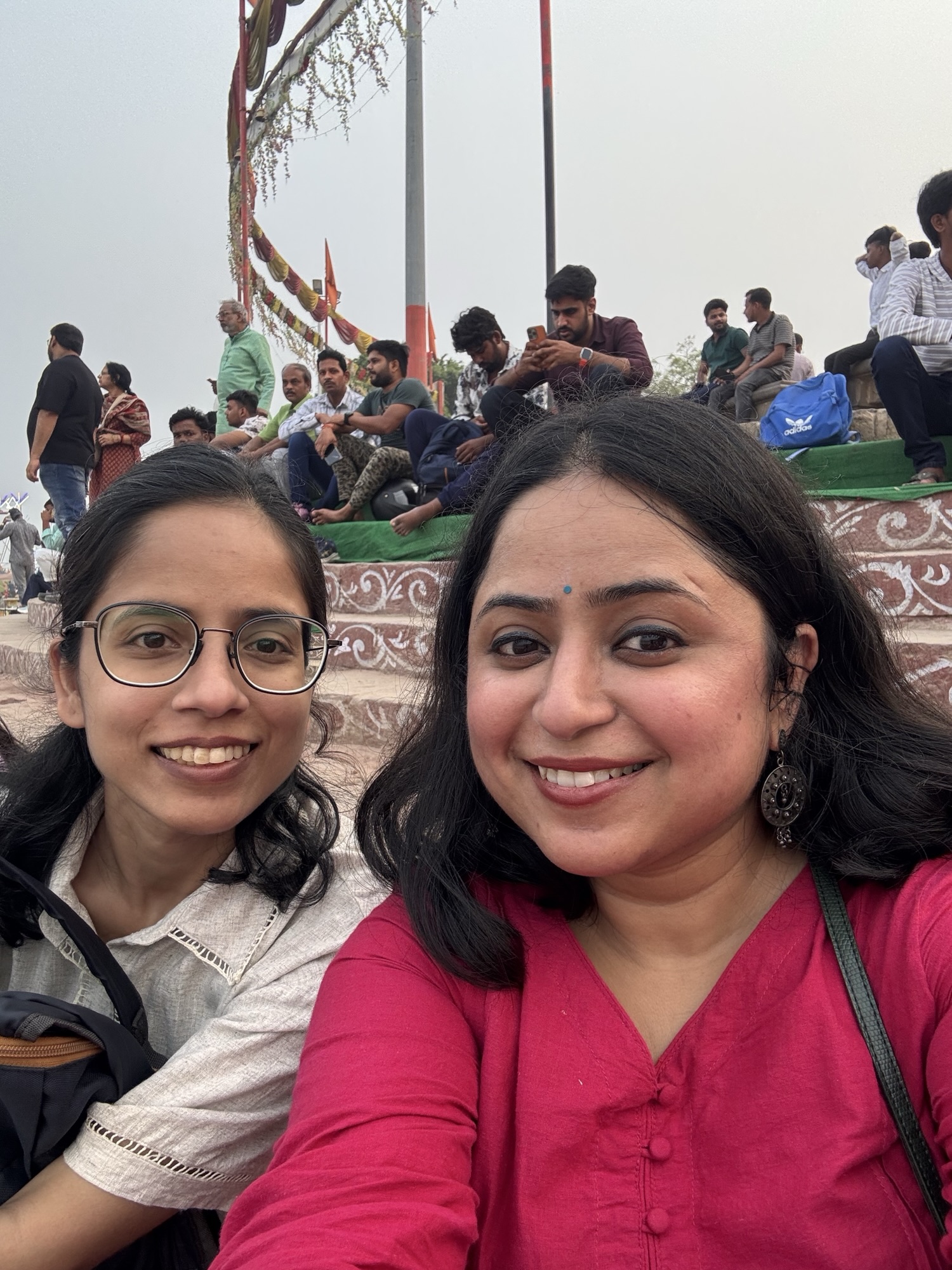
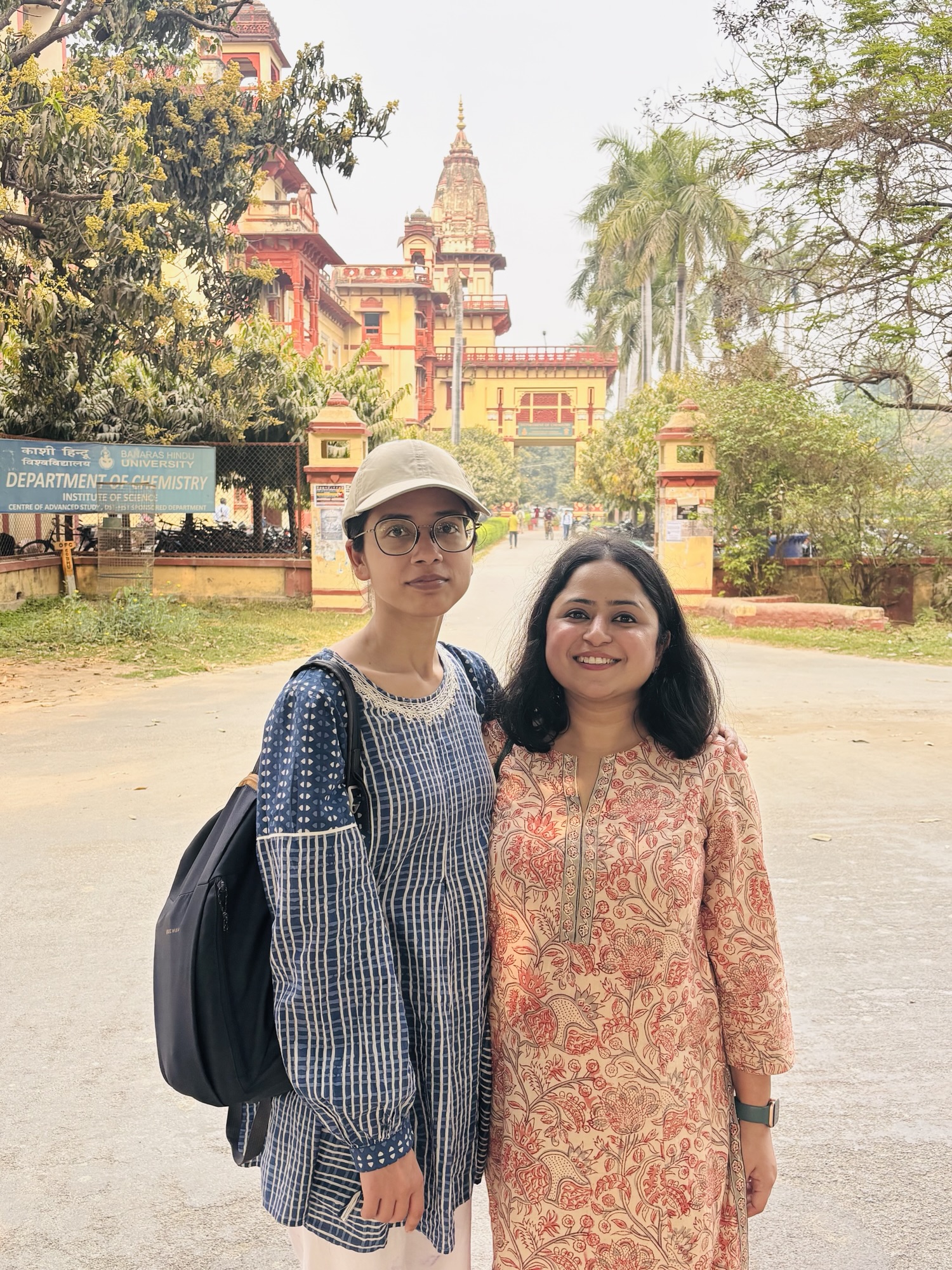
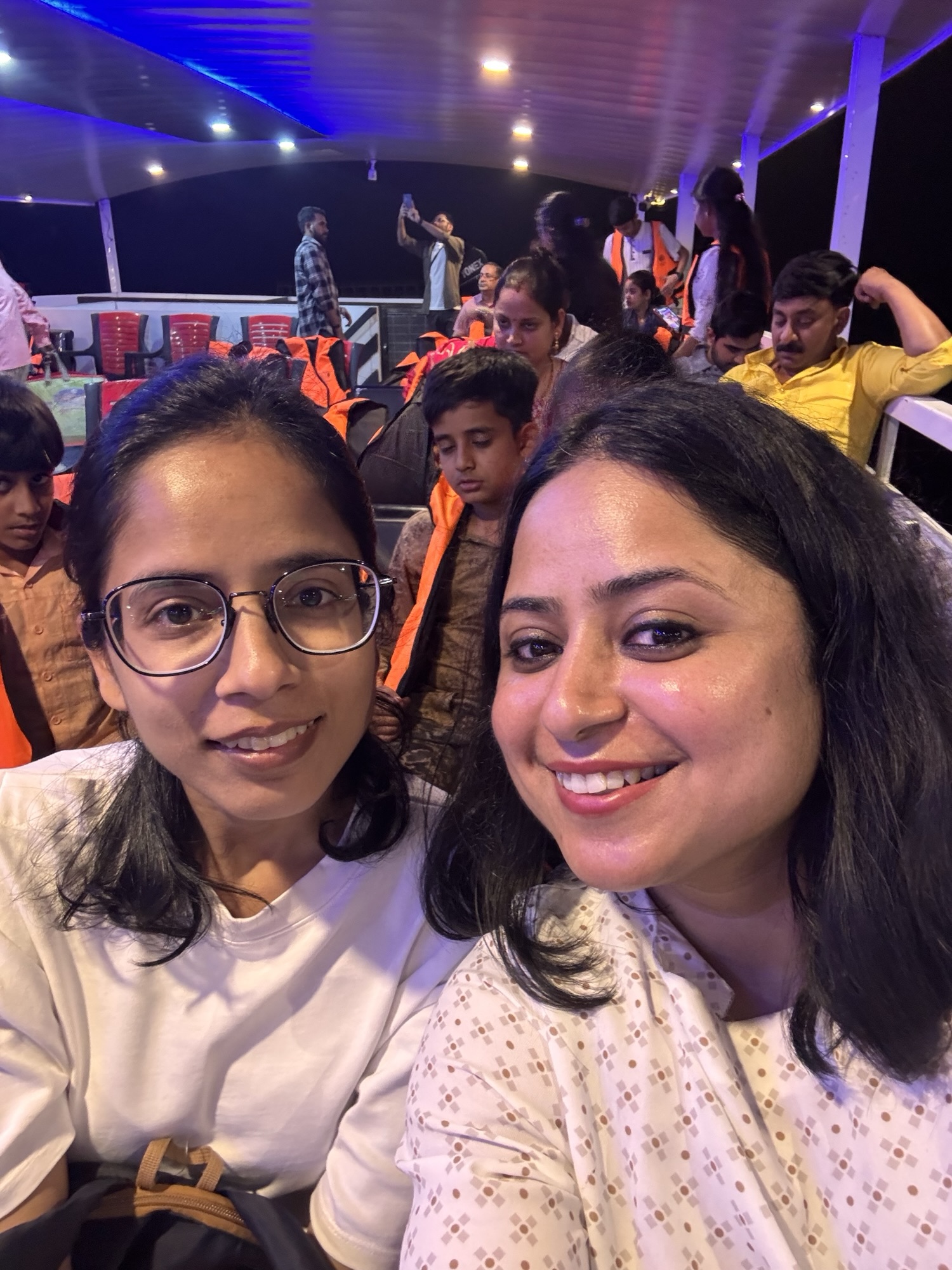
For four days, my sister & I explored Benaras on foot, in autos, & in cabs that could not reach half the places we wanted to go. This Benaras was different from every version of it I had experienced before.
This one was cool from my window & dusty on the road. New in spirit & ancient in its architecture. Young inside the university & the colleges, elderly at the ghats. It was welcoming & full of stories, like a grandparent, when I was near Maa Ganga & inside Kashi Vishwanath & at Sarnath. It was greedy & overcrowded when I was booking boat rides, darshan tickets & guide services. It was a city that has changed & yet stayed exactly the same in essence.
Kashi Vishwanath, & a sour morning
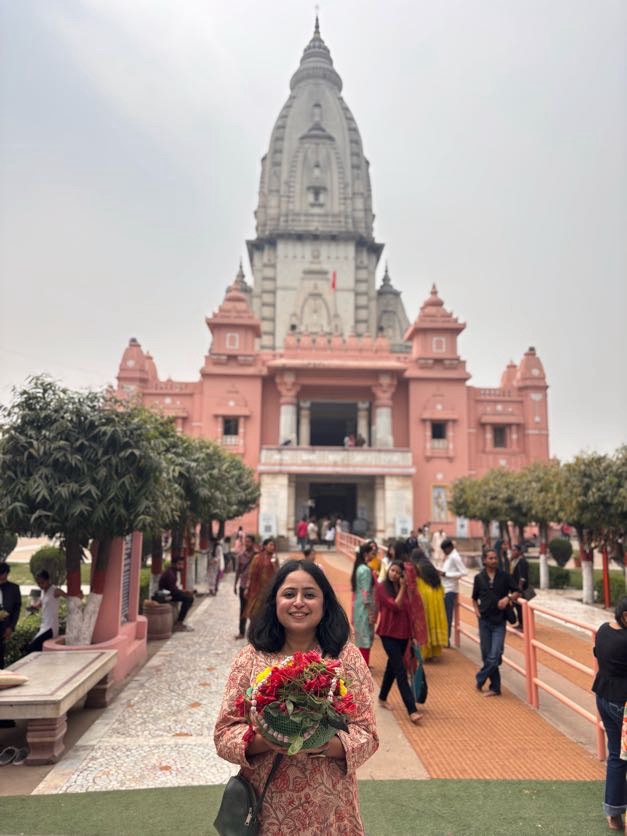
I am a Shiva person. An ardent one. I count myself lucky every time I get to visit one of his temples or a site tied to his legends, & I am fairly sure this is the real reason I love the mountains as much as I do. He lives there. So Kashi Vishwanath was always going to be beautiful. It was my second time.
We got up early to reach the temple before the day did. It was a Monday, too, which is his day, & that felt like a small gift. We got out of the car & a pundit-looking man approached us almost immediately, & both of us said yes to his services, because neither of us wanted to stand in the queue. We bought VIP tickets as well. Long story short, he scammed us.
I will spare you the details, partly because they are boring & partly because I am still annoyed. What I will say is that it left a taste in my mouth I could not get rid of for the rest of the morning, & I did not enjoy that darshan the way I have enjoyed Mahakal or Somnath. I stood in front of a jyotirlinga I had waited years to see again, & spent most of it doing arithmetic about how much I had been taken for.
That is the honest version. Nobody writes it. It happens here every single day, & it happened to two women who travel a great deal & should have known better.
If you take one practical thing from this post, take this: book the Sugam Darshan slot yourself, in advance, on the official portal, & do not accept help from anyone who approaches you in the parking area.
The boat rides
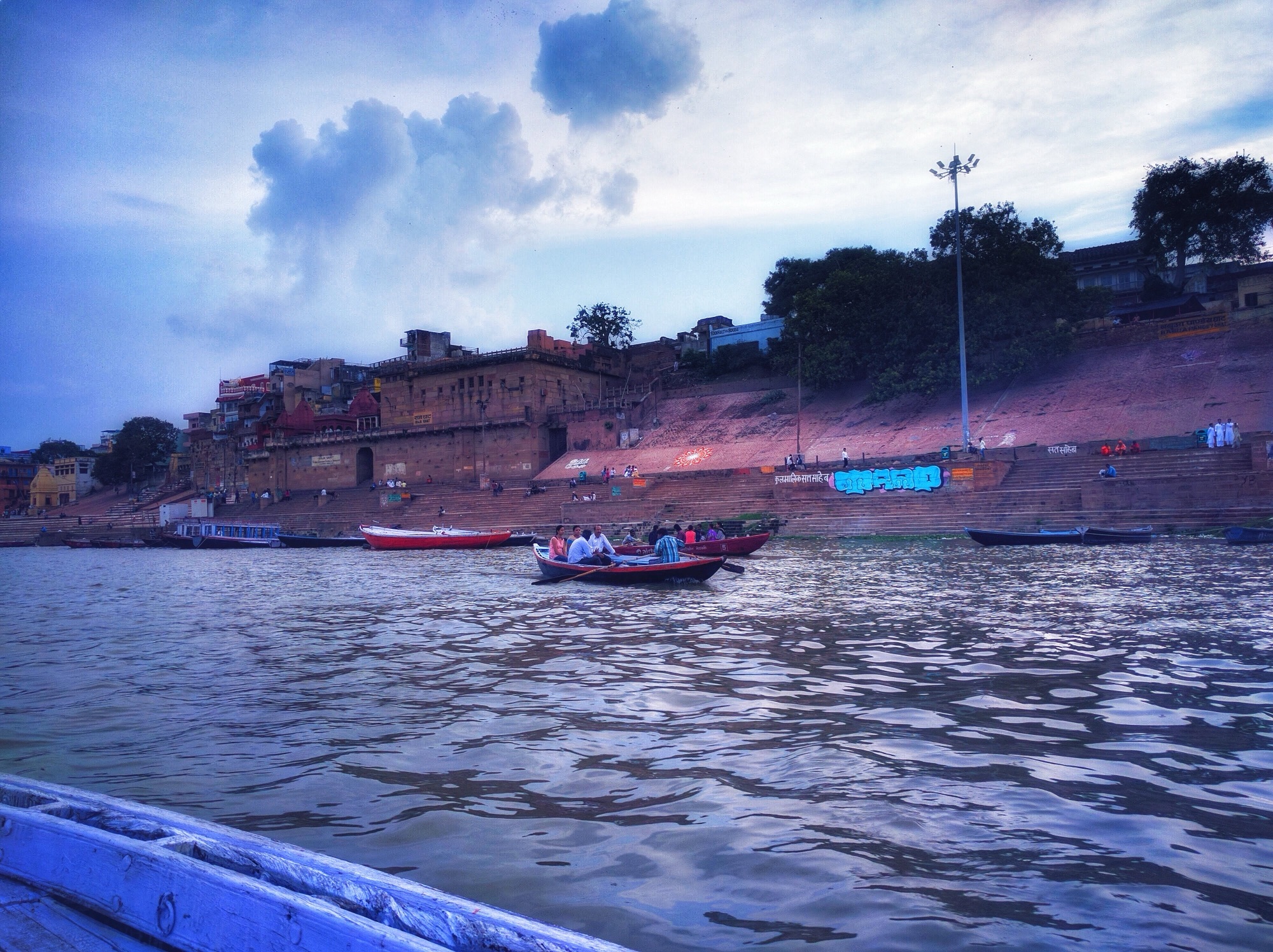
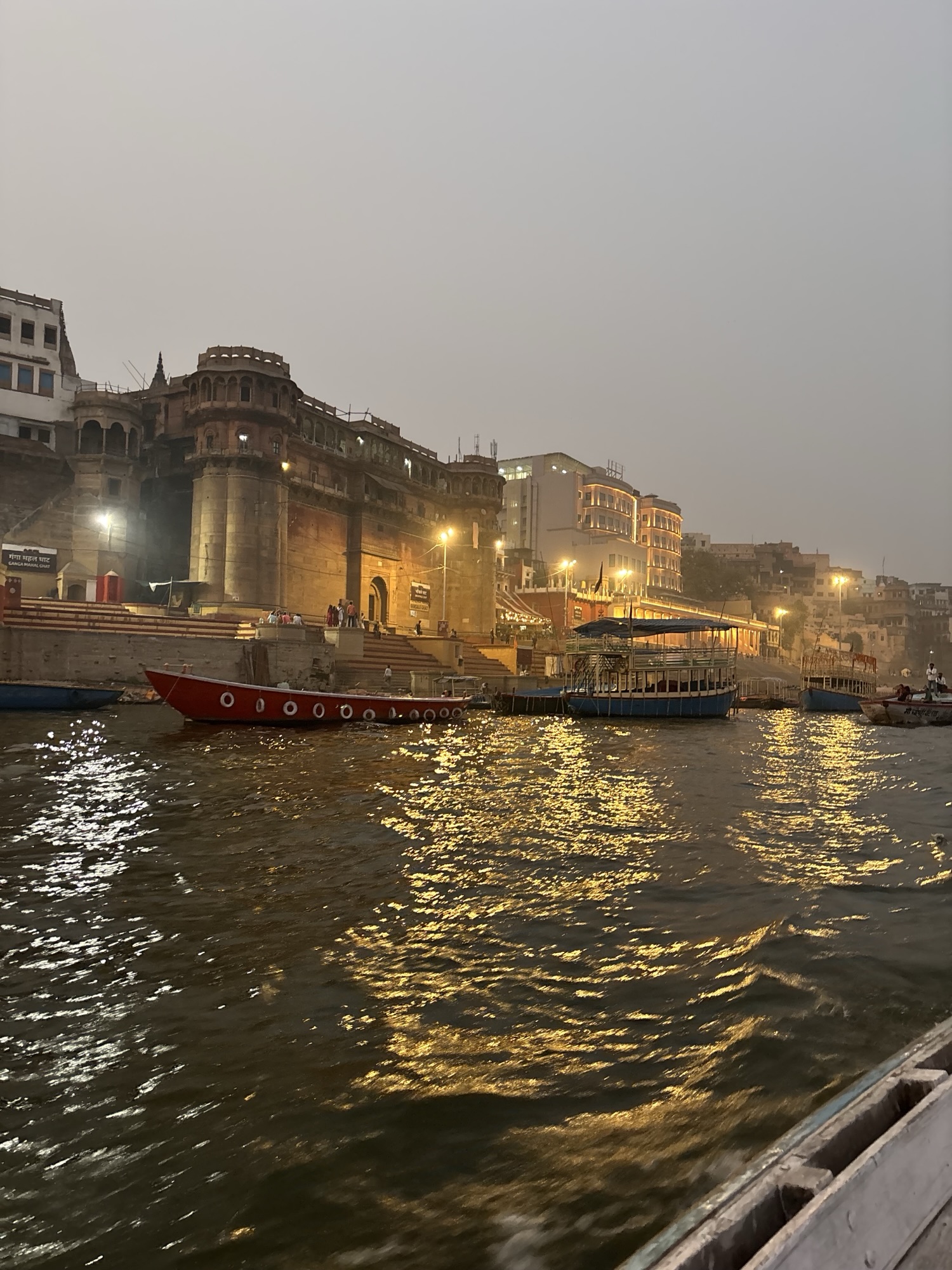
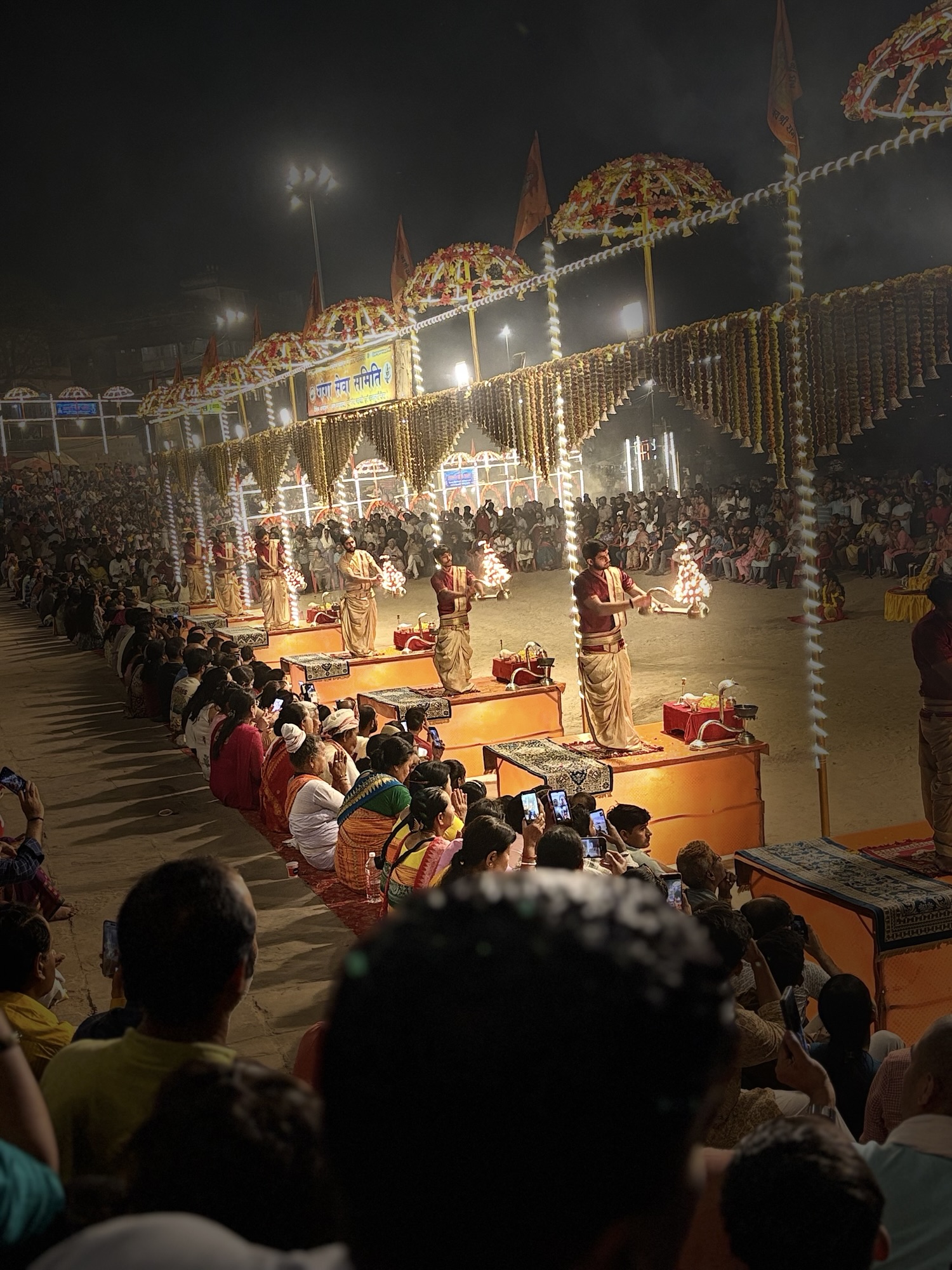
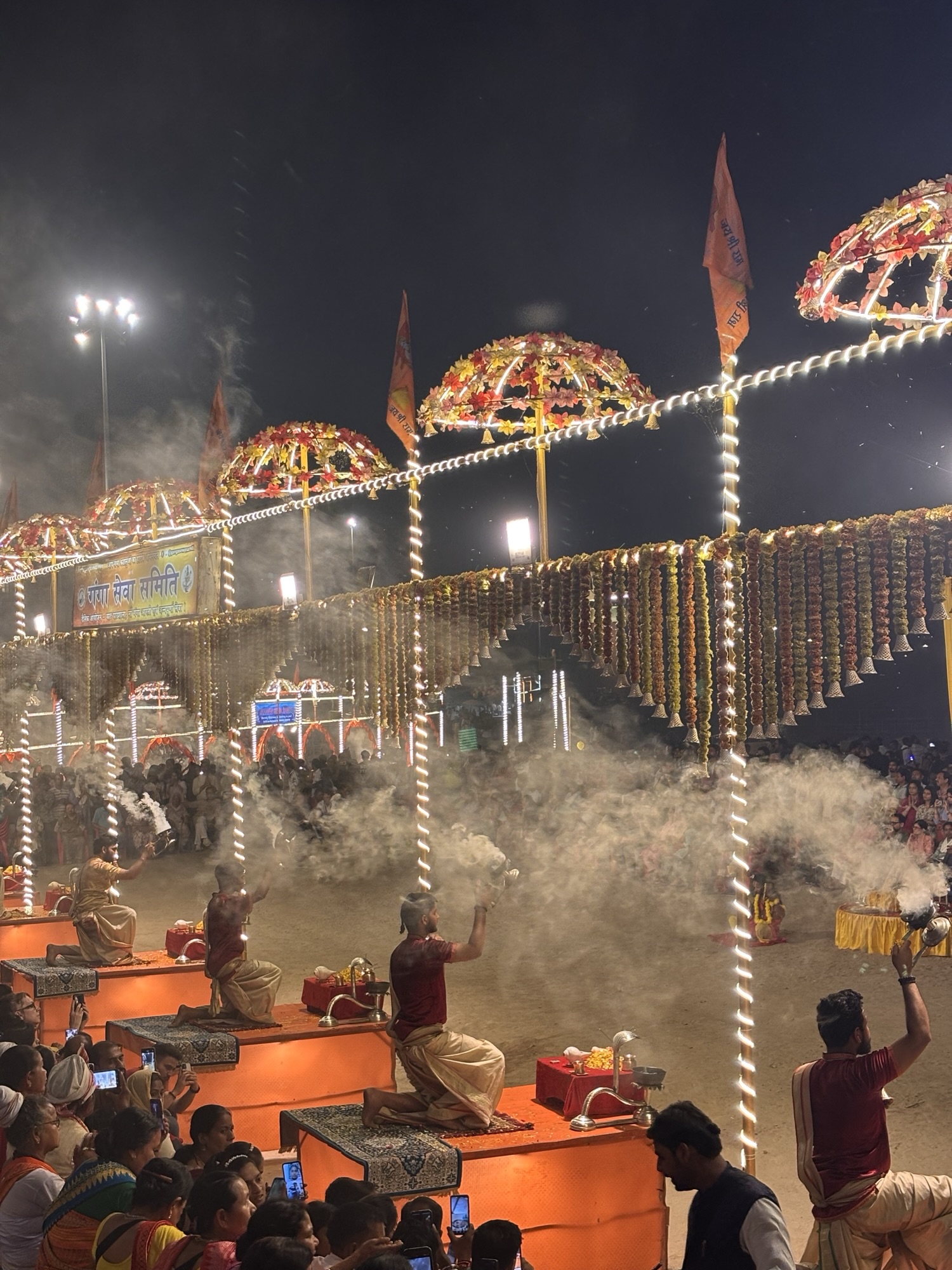
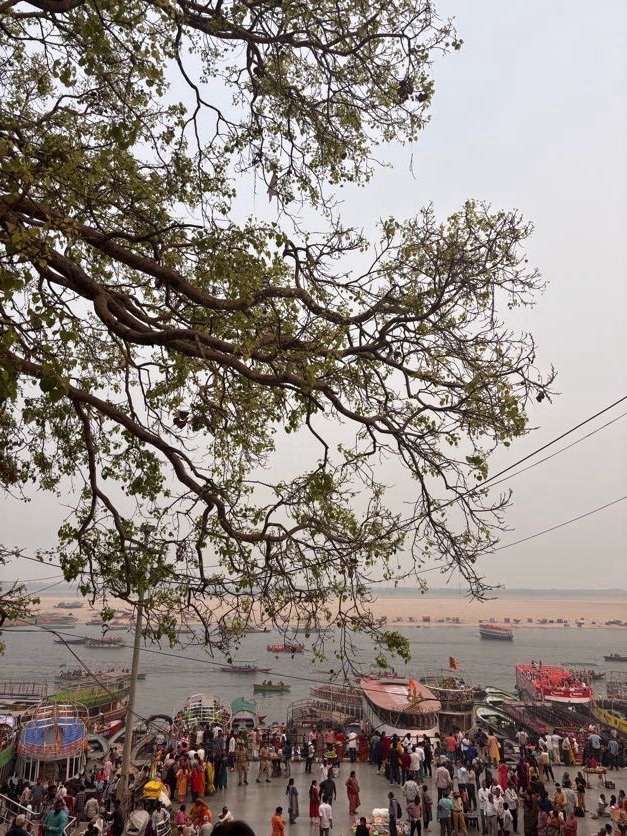
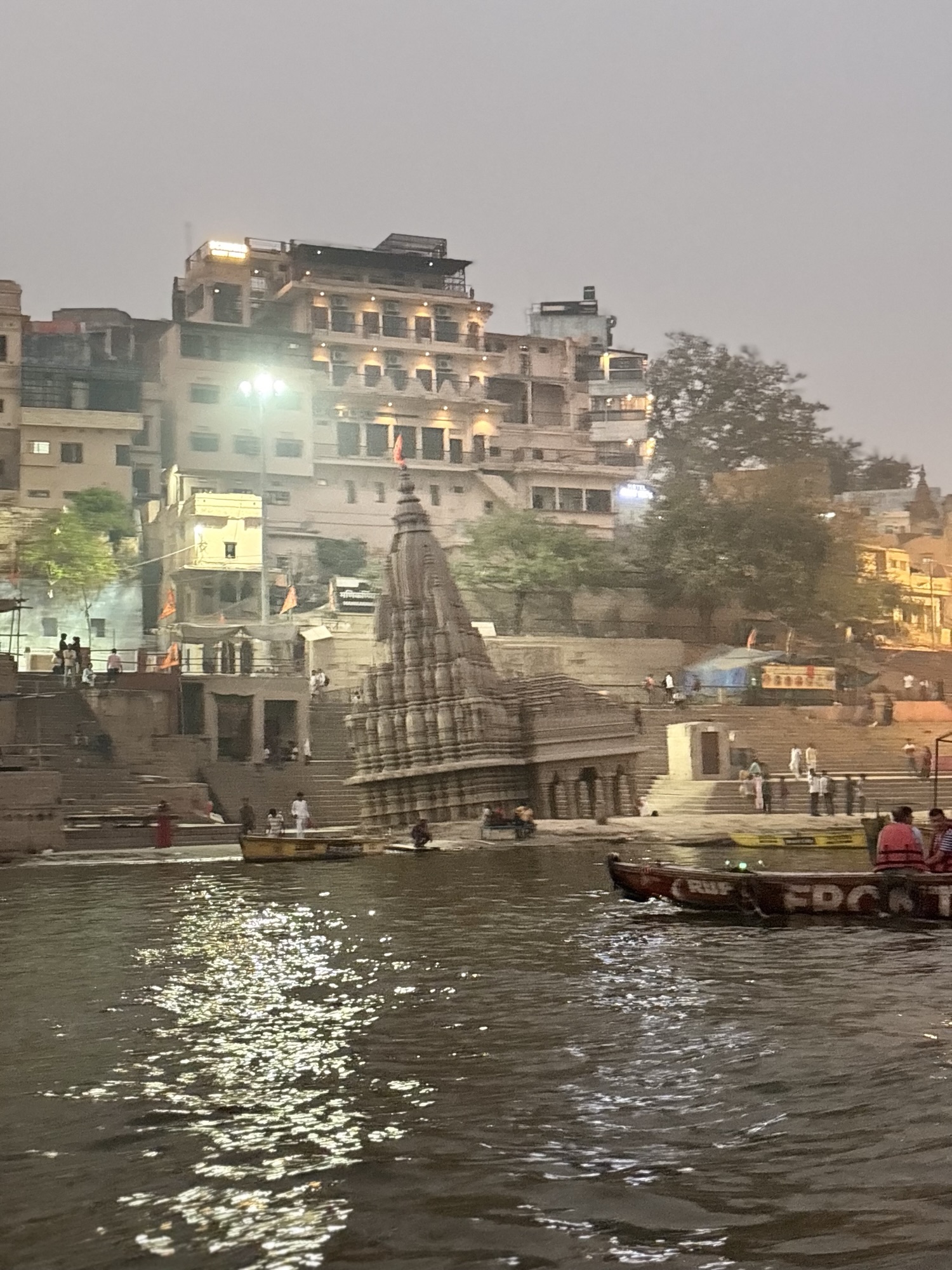
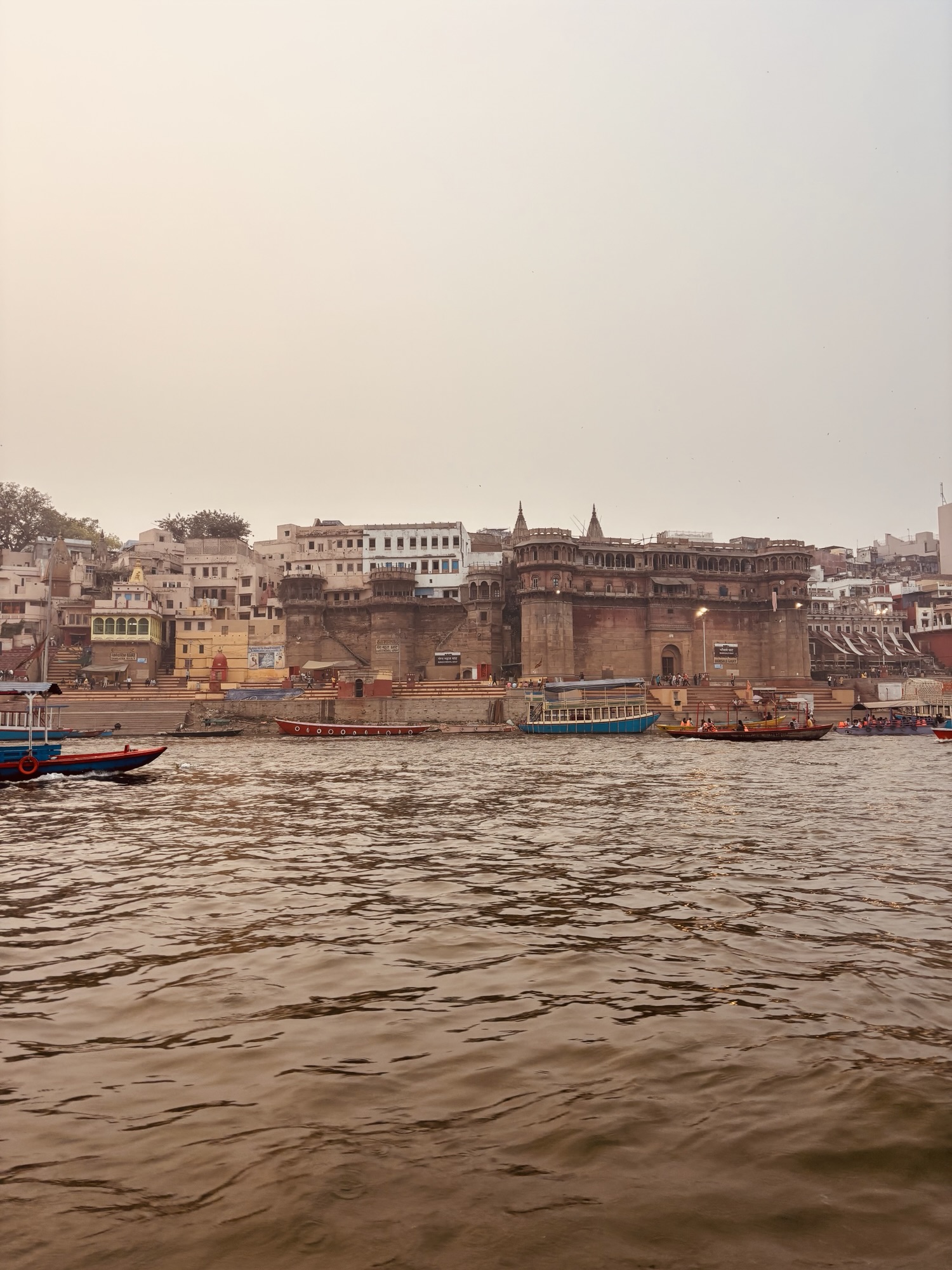
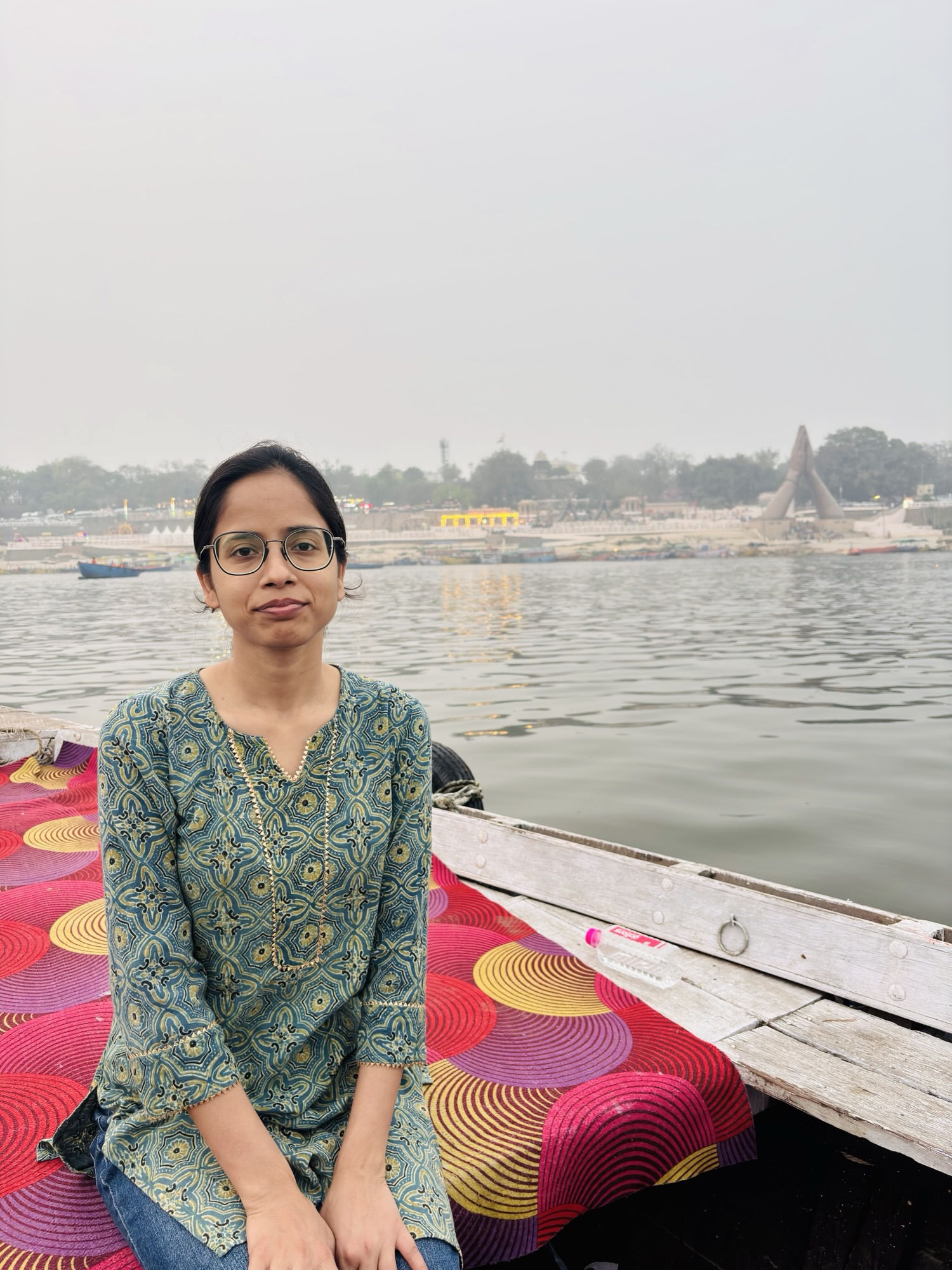
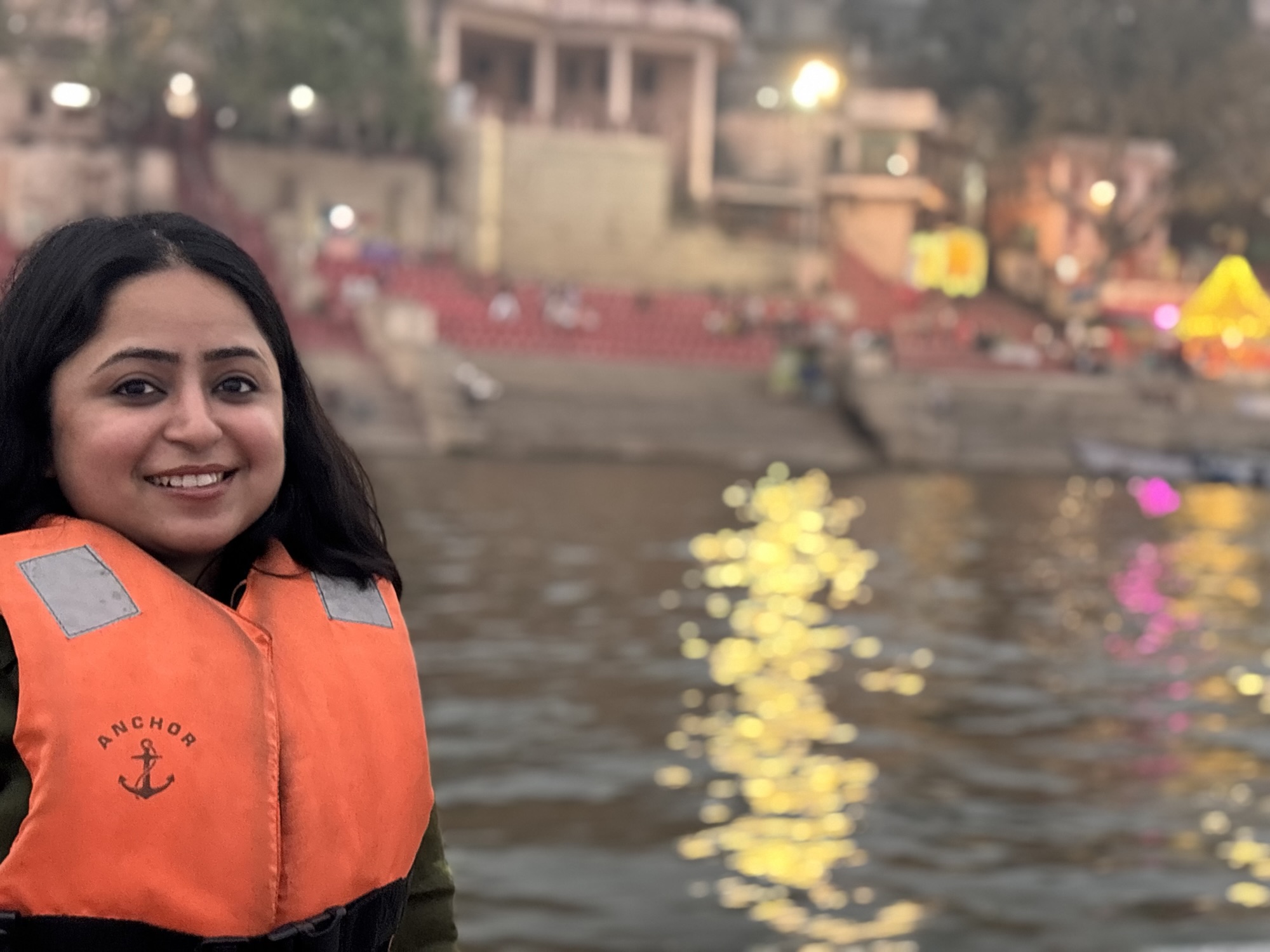
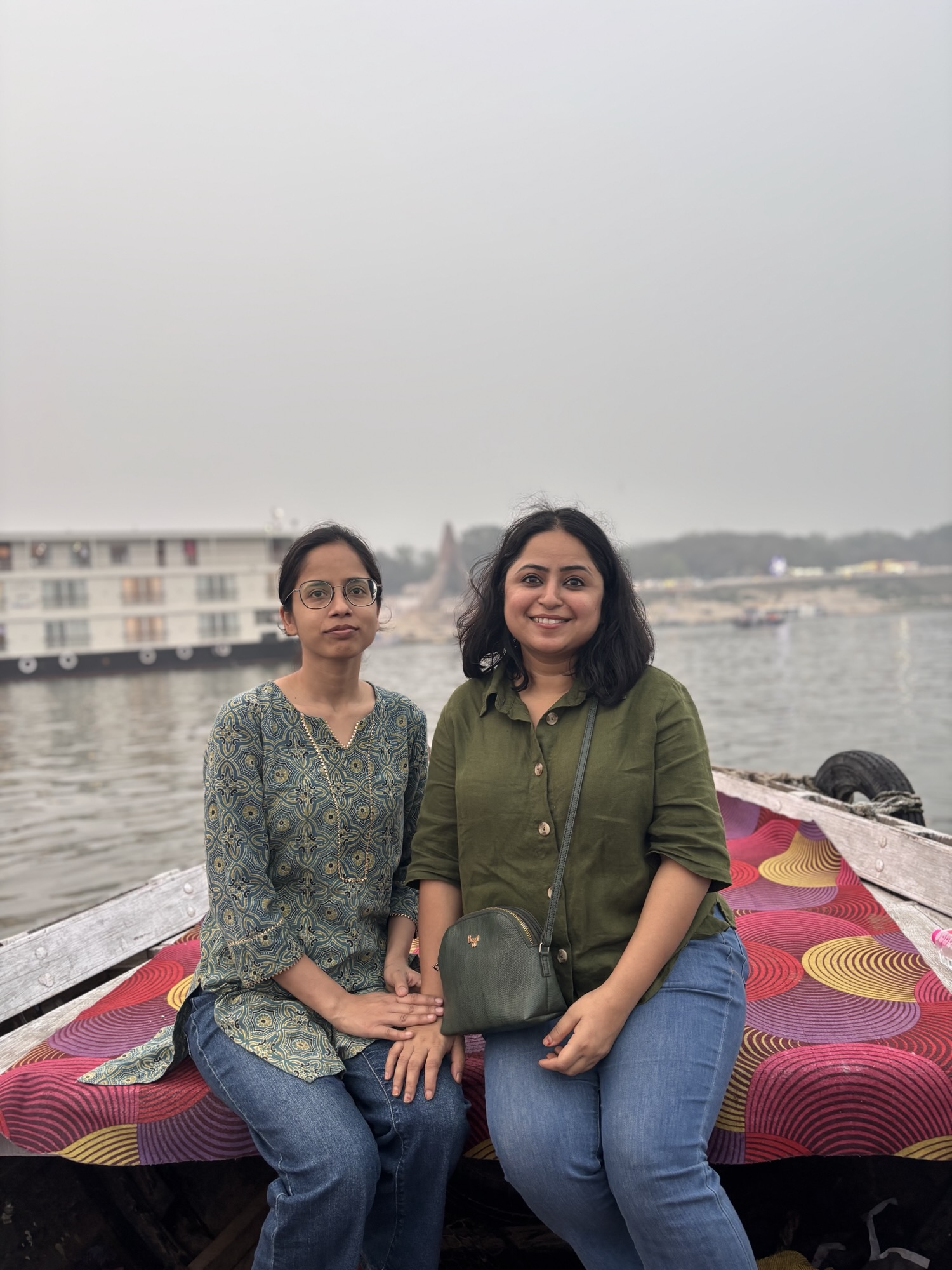
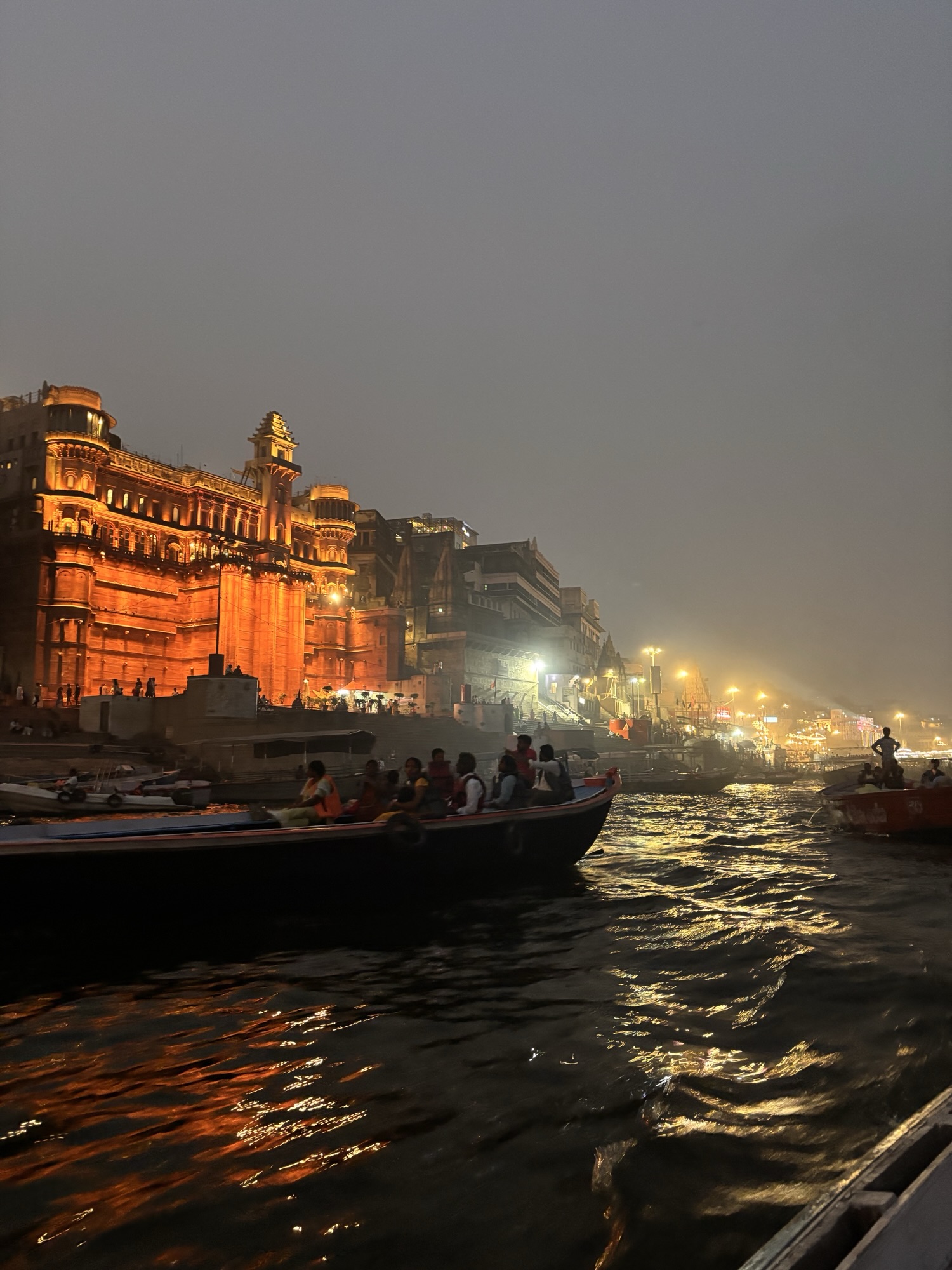
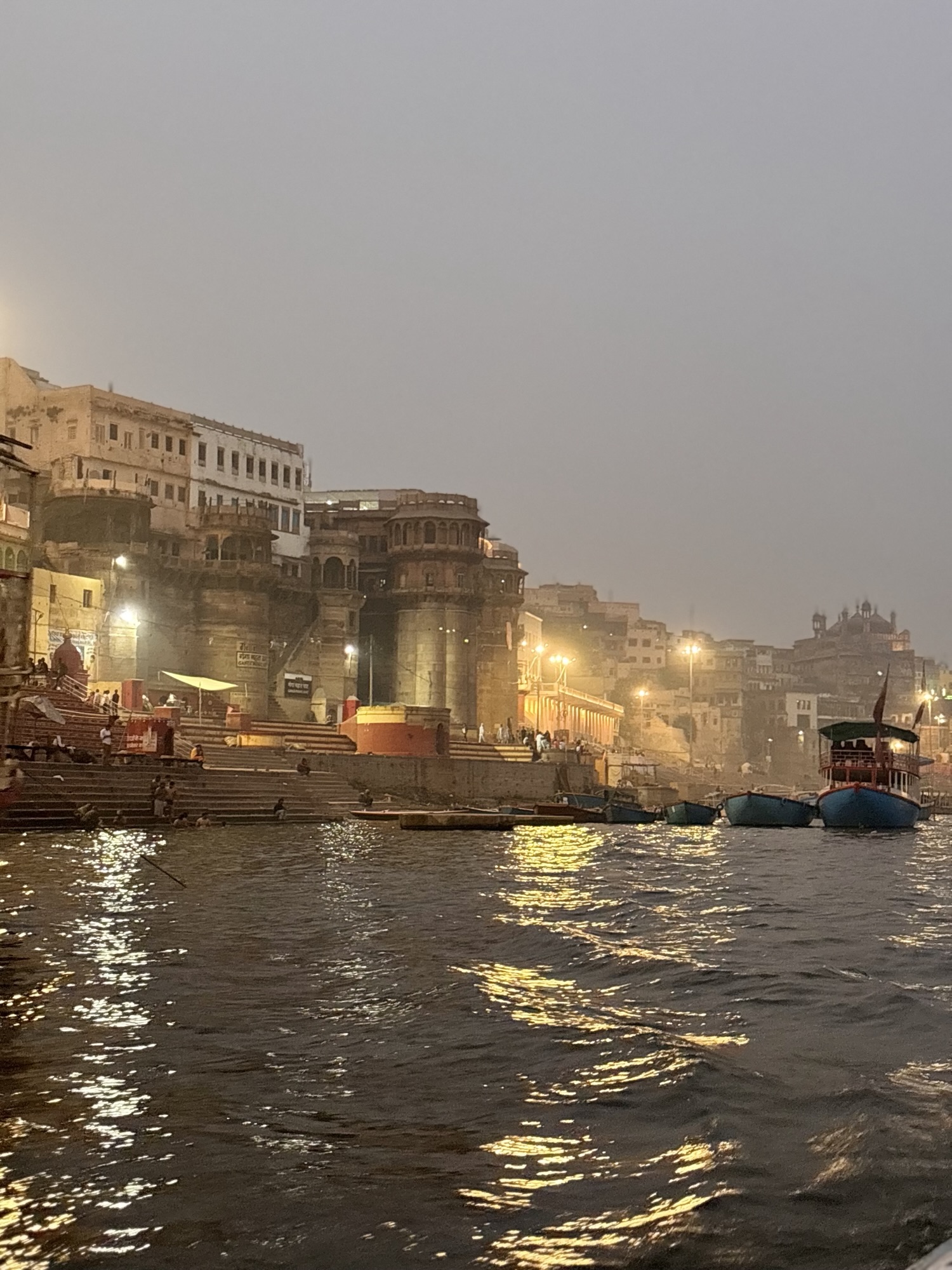
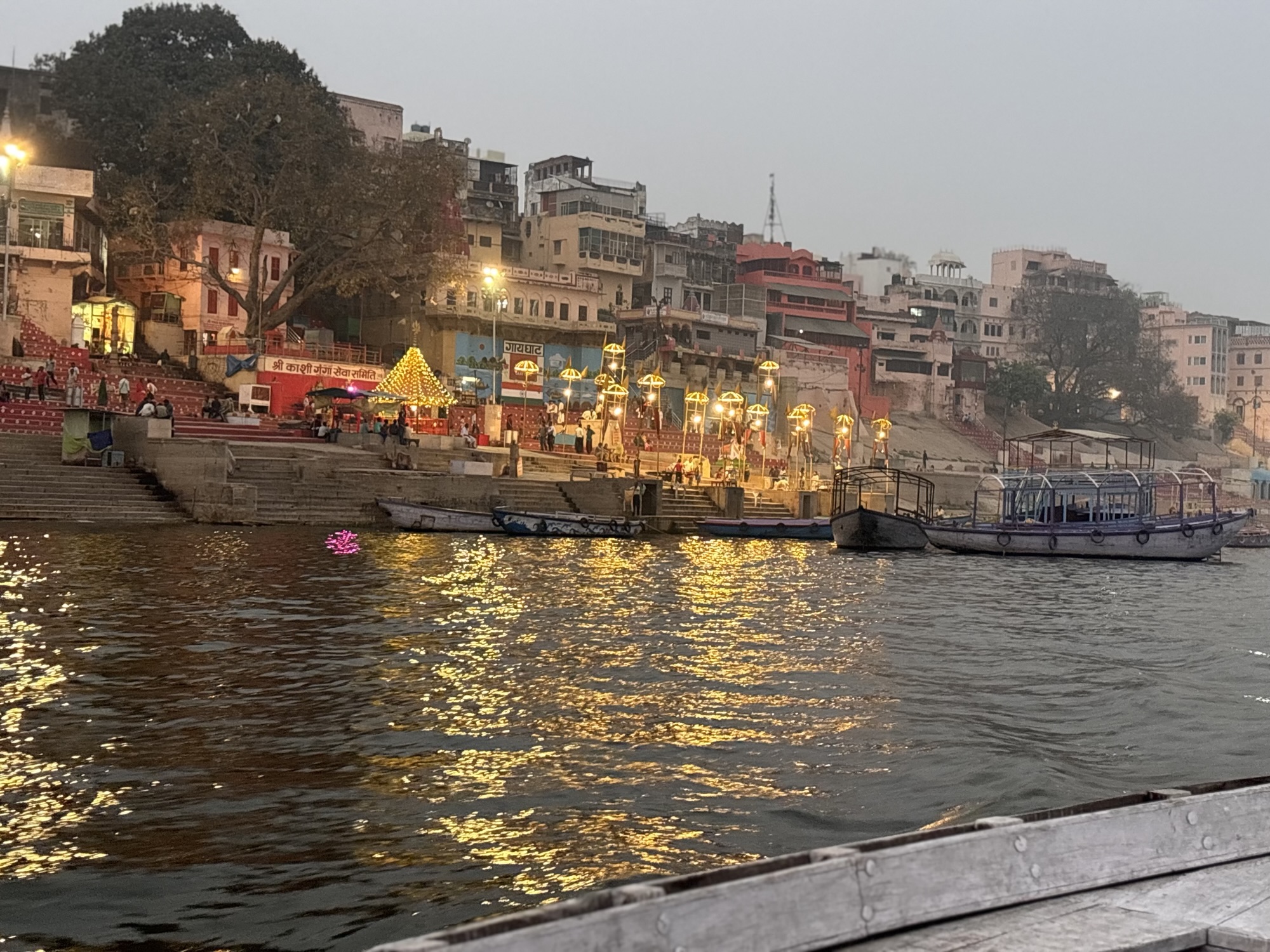
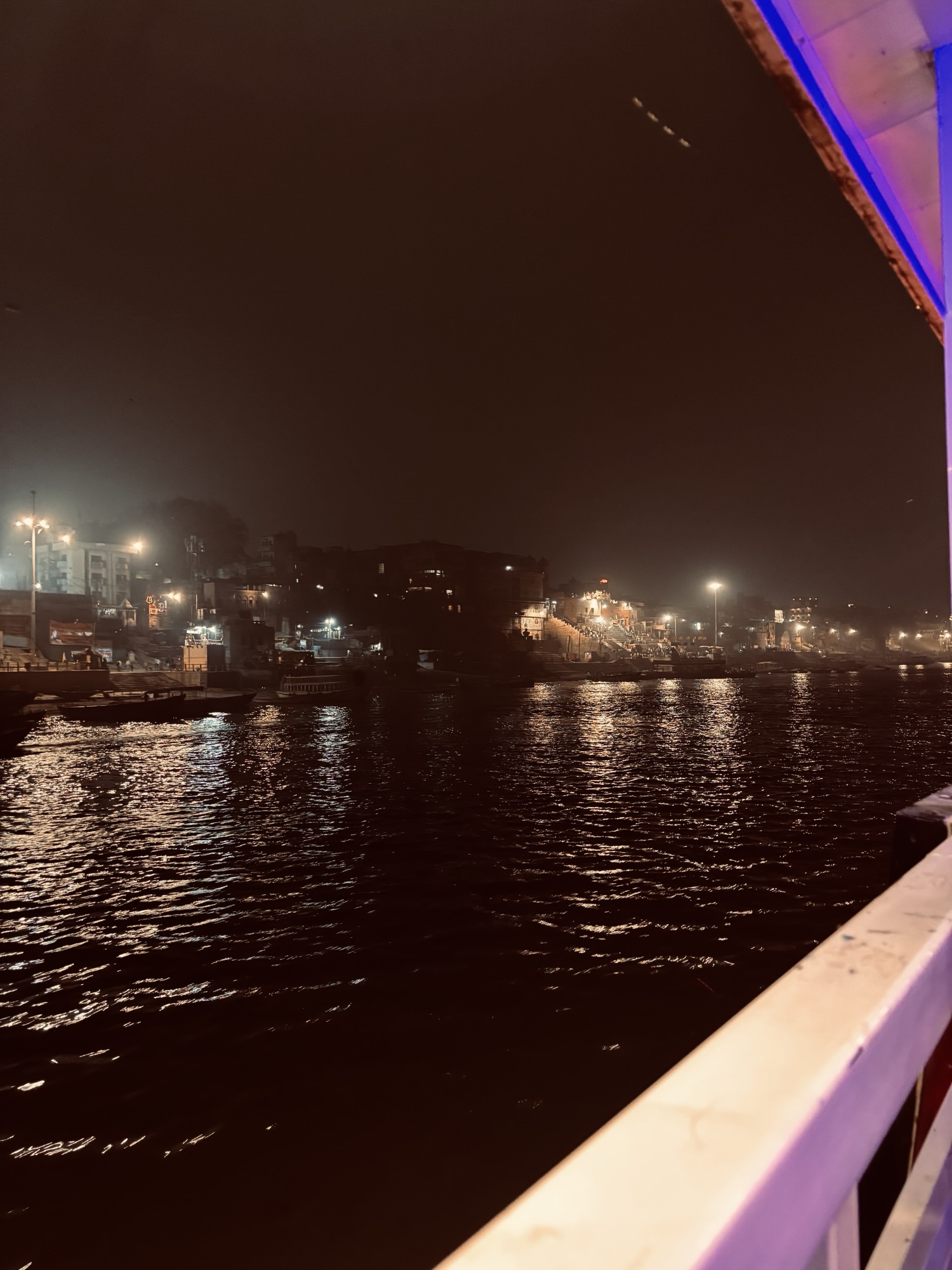
And then the boat rides, where we spent our mornings & our evenings watching Maa Ganga & the many ghats going about their business.
That is the thing about watching a ghat from the water. You are close enough to see everything & far enough that nobody performs for you. There were people meeting each other on those steps, & a fair number of them meeting themselves. On some ghats the diyas were already going, sparkling all the way down to the river. On others there was simply quiet. Some are new, most are very old, & all of them are busy being what they are, at six in the morning & again at six in the evening, whether or not there is a boat going past.
There are 84 ghats along this stretch of riverfront, & the number is not an accident of construction. It comes from the belief in 84 lakh yonis, the 84 lakh forms of life a soul is said to pass through before it arrives here. Bathe at all 84 & you are done with the cycle. The city has built its cosmology into its steps.
Most of what you see is younger than you think. The stone ghats as they stand today were largely built or rebuilt in the 18th century, a great many of them under Maratha patronage. The Peshwas, the Holkars, the Scindias, the Bhonsles & the rulers of Benares each put up a ghat with the family name on it, the way people put up buildings now.
And here is the detail I loved. The amber-gold of the ghats, the colour that makes them glow at sunrise & sell a million photographs, is Chunar sandstone, quarried at Chunar. That is the same Chunar Fort my father lectured us about from Wikipedia in a cab in 2016, while three people pretended to listen. The city I thought I had already seen had been quietly holding a thread back to a day I had filed away as a joke.
Subah-e-Banaras: the city wakes up before you do
If you only ever do one thing in Benaras, make it this. Assi Ghat, before six in the morning. There is a formal programme called Subah-e-Banaras, with Vedic chanting & yoga & classical music as the sun comes up over the water, but the programme is honestly the least of it. What gets you is everything happening around the programme.
Oldies doing surya namaskar with the unbothered confidence of people who have done it for forty years. Boys learning to swim in a river that has already seen everything. Someone practising a raag on the steps for nobody. Priests, tea, dogs, & wrestlers at Tulsi Ghat. Twenty different lives going on at full volume, none of them performing for you.
This is the Benaras that is young at the university & elderly at the ghats, both at once, at the same hour, on the same set of steps.
Ganga-Jamuni tehzeeb, & what we have done with it
This is the section I have rewritten four times & am still not happy with. Benaras is the most complete example I have personally stood inside of what we used to call Ganga-Jamuni tehzeeb.
The composite culture of these plains, where Hindu & Muslim ways of doing things did not merely tolerate one another but folded into each other & produced a third thing that belonged to neither & to both.
Ustad Bismillah Khan was born in Dumraon in 1916, but Benaras made him & he would not leave it, even when the world offered him better addresses. He played the shehnai in this city’s temples his whole life. He played as independent India arrived in 1947. People sometimes asked him how a devout Muslim could play inside a temple. He never quite seemed to follow the question. That is the tehzeeb. It was never tolerance. It was bafflement at the suggestion that there was anything there to tolerate.
And Kabir, who was raised in a Muslim weaver family of this city & is claimed today by Hindus, Muslims & Sikhs alike, spent his whole life telling every one of them that they were missing the point.
साधो, देखो जग बौराना।
हिन्दू कहत राम हमारा, मुसलमान रहमाना।
आपस में दोऊ लड़ै मरत हैं, मरम कोई नहिं जाना॥
The smoke over the Ganga
The last decade of social media & commercialisation has marred the spirit of a Ganga ride. There is a boat or a ferry in every direction now, packed full, & smoke coming off all of them. From any distance you can see a dark envelope sitting over the river, & the soot settles on everything, including you. You look up & the city is ancient & mystical & one of the most beautiful things I have ever stood in front of. You look down & there is haze on the water. I have gone back & forth on how to feel about this & I have not landed.
Because every one of those boats is somebody’s income. The man rowing you past Manikarnika, telling you about Meer Ghat & Man Mandir & getting some of it wrong is not the villain of this story. He has a family & an EMI & a season that lasts only so many months of the year. It is not fair to sit in his boat, pay him four hundred rupees, & feel disappointed in him.
But I also cannot pretend I did not see it. And I do not think a city this old should have to choose between feeding the people who live on its river & being able to breathe. That, I think, is the difference between the two trips.
The first time, Kashi was handed to me. The itinerary, the prashad, the aarti, the Wikipedia lecture in the cab to Chunar, all of it my father’s, & I only had to show up & be taken care of. This time I was the one deciding where we went & how long we stayed, & a city you choose for yourself will always show you more than a city you are taken to. It shows you the ghats & the aarti & the diyas going down to the water at six in the evening. It shows you Meer Ghat & Bismillah Khan & more poetry than any city has a right to. It also shows you the man in the parking lot, & the smoke.
I would go back tomorrow. But I would like Papa to see it once more first. So that I can stand to one side & watch him look for that one rupee coin.
Benaras: an itinerary
And because someone always asks, here is everything practical I would tell a friend before they went.
How to reach:
By air: Lal Bahadur Shastri International Airport at Babatpur, about 25 km from the city, connected to Delhi, Mumbai, Bengaluru, Hyderabad, Kolkata & a few international routes.
By train: Varanasi Junction (Cantt) is the main one. Banaras station & Pandit Deen Dayal Upadhyaya Junction across the river are useful alternatives when Cantt is full.
By road: Well connected to Prayagraj (about 120 km), Lucknow, Gorakhpur & Patna.
Ideal duration:
2 days: Ganga Aarti at Dashashwamedh, a sunrise boat ride, Kashi Vishwanath, Sarnath, one long food walk.
4 days: Add Subah-e-Banaras at Assi, the full ghat-to-ghat boat tour, BHU & Bharat Kala Bhavan, Ramnagar Fort, Chunar Fort, & enough unplanned time to get properly lost.
Suggested itinerary:
Day 1, the river: Arrive, rest through the afternoon heat, walk down to the ghats by evening, Ganga Aarti at Dashashwamedh from the steps.
Day 2, the city: Early Divya Darshan at Kashi Vishwanath, kachori-sabzi in the old city lanes, Manikarnika & Harishchandra on foot, evening boat ride with the aarti seen from the water. It is a completely different ceremony from a boat.
Day 3, beyond the ghats: Sarnath in the morning, about 10 km away, where the Buddha gave his first sermon. A museum in the afternoon, BHU campus towards evening.
Day 4, slow: Subah-e-Banaras at Assi before sunrise, Banarasi silk shopping, Ramnagar Fort or a day trip out to Chunar, paan to finish.
Food recommendations:
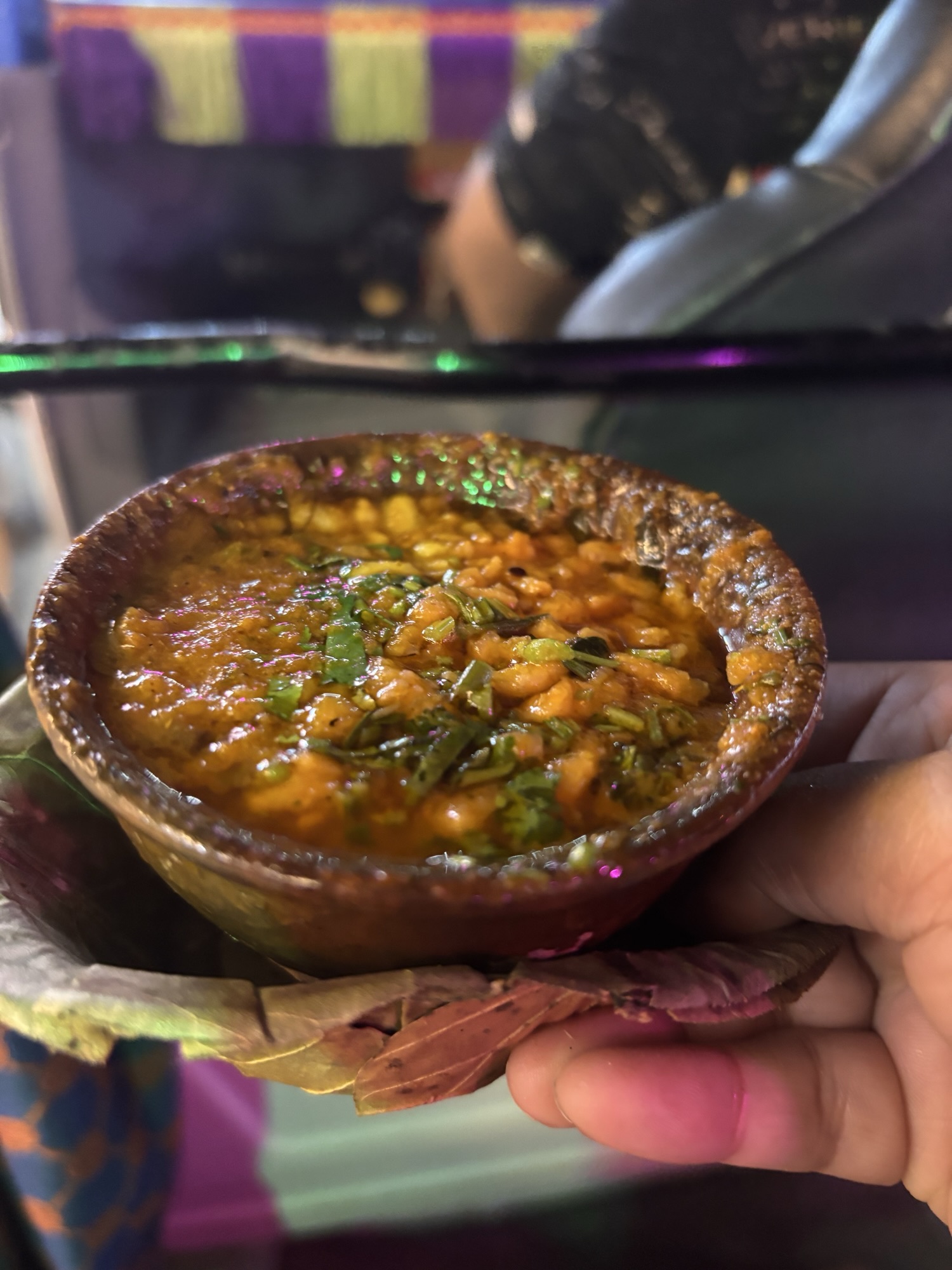
Chaat: Deena Chaat Bhandar, Kashi Chaat Bhandar
Breakfast: kachori-sabzi & bedmi puri in the Godowlia & Dashashwamedh lanes
Lassi: Blue Lassi, Pehalwan Lassi
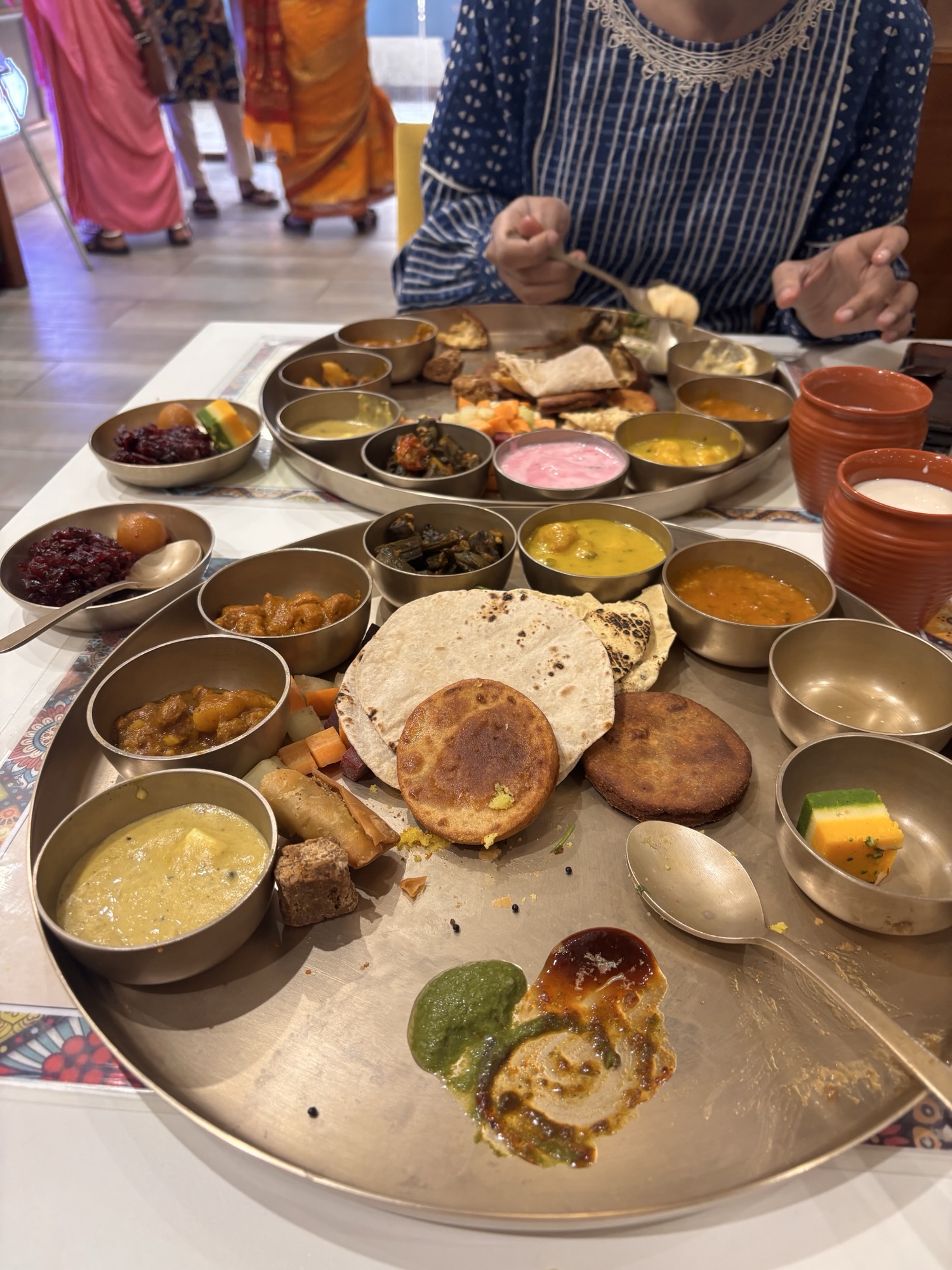
Local thali: Baati Chokha
Sweets: Rajbandhu, Ksheer Sagar
Must try: Banarasi paan, tamatar chaat, launglata, thandai, & malaiyo if you are there in winter
Shopping guide:
Banarasi silk: Buy from the government emporium or from authorised weavers around Madanpura & Lallapura. Ask for the Silk Mark & the GI tag. Be prepared to be shown powerloom & told it is handloom. Give it the extra hour, & buy from the people who actually wove it. After everything above, it feels like the least one can do.
Also worth carrying home: wooden toys, brass & bronze work, rudraksh, & paan masala for whichever relative will ask.
Photography guide:
Ghats: Sunrise, from a boat. Soft light, thin crowds, & the whole city facing you.
Manikarnika: Do not photograph the pyres. That is somebody’s last day on earth, not a frame.
The lanes: Late morning, when the shops are open & the light comes down in slices.
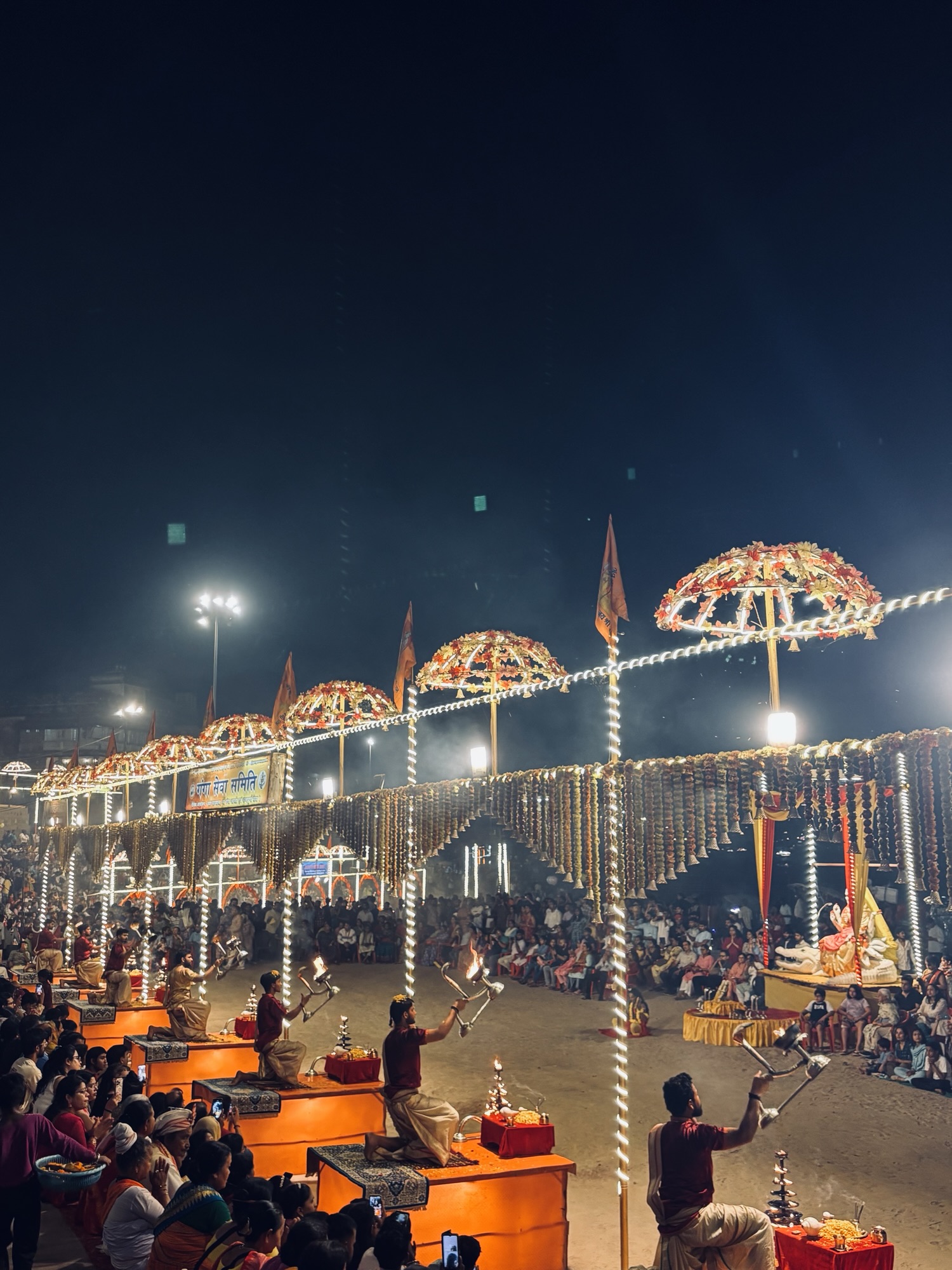
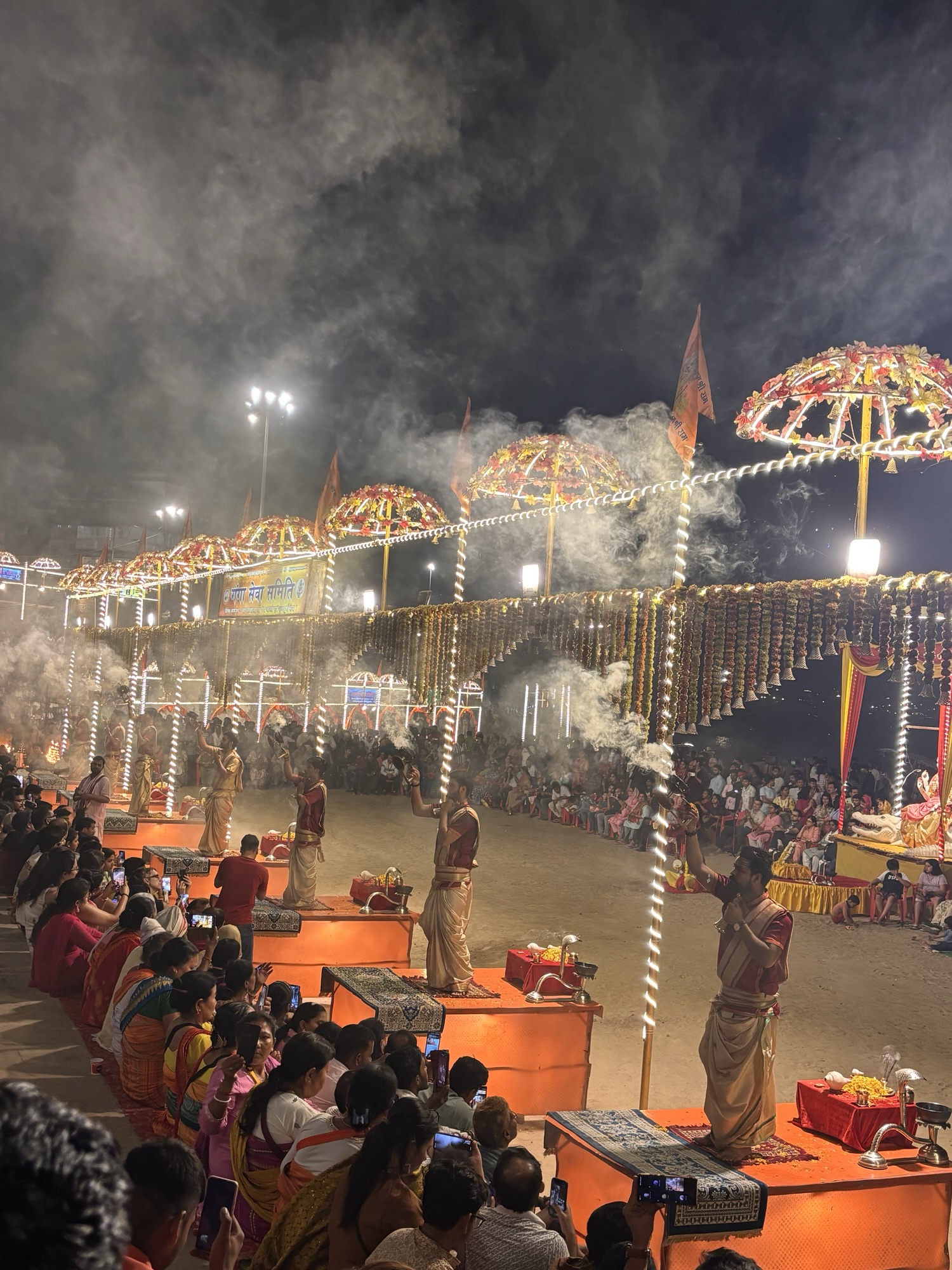
Ganga Aarti: Go early for a spot on the steps if you want the wide shot. From a boat you will get the priests, but you will also get eleven other boats parked in front of you.
Useful tips:
1. Wear shoes you can climb steps in for hours. The ghats are not gentle.
2. Fix the boat price before you sit down, & fix the number of ghats along with it.
3. Book the Sugam Darshan slot yourself, in advance, on the official portal. Do not accept help from anyone who approaches you outside the temple, however official they look. I learnt this the expensive way.
4. Carry cash. Makes the life easier.
5. Keep one full day with nothing planned in it. Benaras rewards that more than most cities.
6. If you are travelling with parents, keep a stock of one rupee coins in your bag. Trust me on this one.

