I have always enjoyed discovering new places – remote, lesser-known, and closer to nature. But once in a while, a new place finds me. Kodachadri and I met like that.
On a recent trip through Chikmagalur and Shivamogga, we found ourselves with an extra day on hand. We checked into a charming property surrounded by bougainvillea, flowering plants, and endless greenery. As we chatted over breakfast, the owner suggested a nearby attraction that, according to him, was not to be missed. Without giving it much thought, we boarded a jeep headed towards the base of the Kodachadri trek, deep inside the Mookambika Forest Reserve. It is mid-June, and the monsoons have arrived in Karnataka. This meant green all around: beautiful, radiant shades of green, much like the emerald in your grandmother’s heirloom ring: luminous, timeless, and unlike anything else. The forests looked freshly washed, the mountains wore a veil of mist, and every turn in the road seemed to reveal another postcard-worthy view.
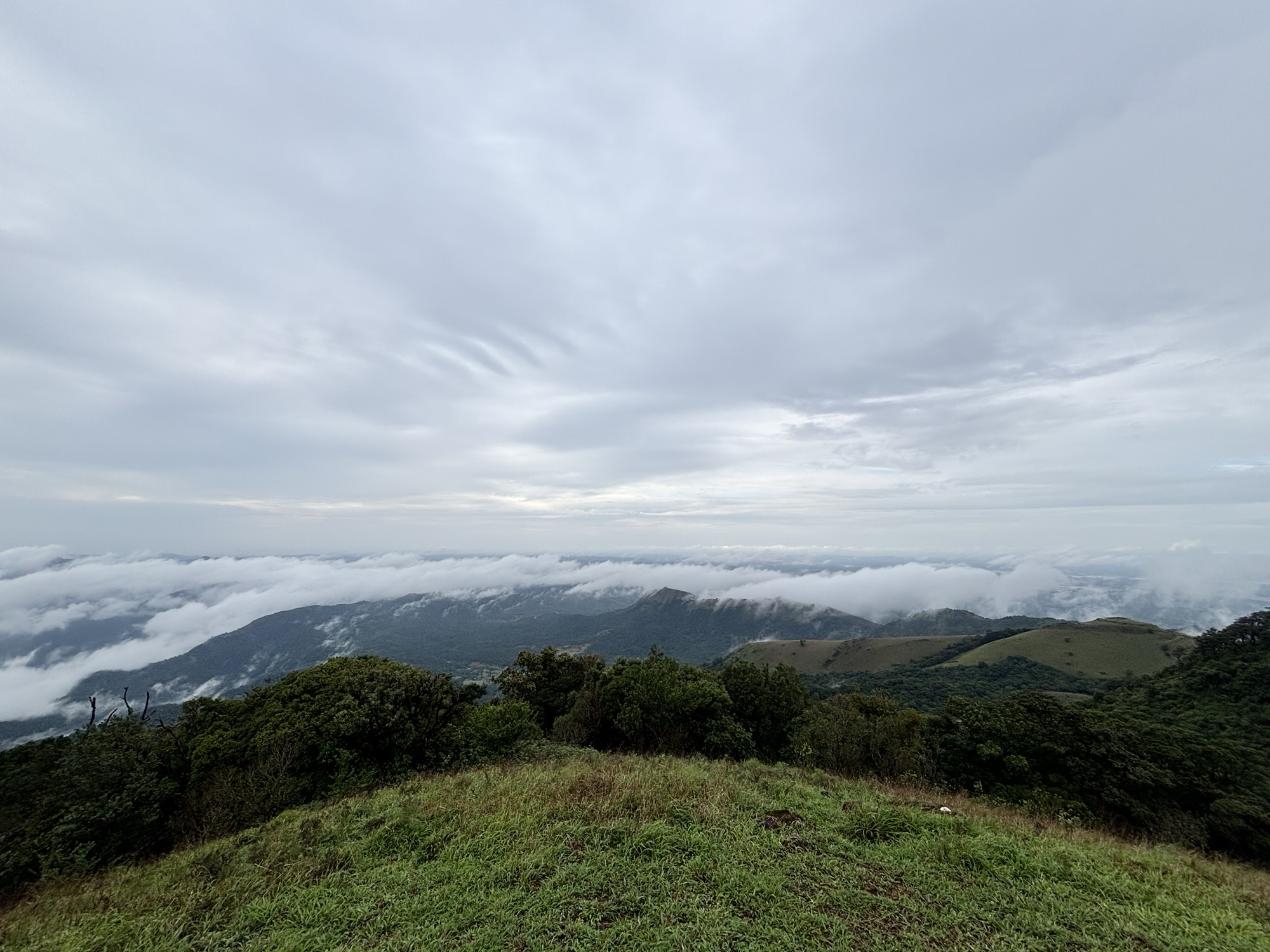
The jeep ride, followed by the trek, took nearly five to six hours in total. Yet the landscape was so breathtaking that it may well stay with me for a lifetime. As we made our way through the dense shola forests, surrounded by drifting clouds and an unmistakable spiritual presence, I wondered: how had I missed this place all these years? Nestled within the Western Ghats, Kodachadri is one of those rare places where nature and spirituality seem to coexist effortlessly. The forests feel ancient, the mountains almost sacred, and the silence has a way of slowing down even the busiest mind. By the time I reached the summit, I realised that this was no longer just another trek. It had become something else entirely – a journey through one of India’s most beautiful landscapes and, unexpectedly, a deeper journey inward.
The Jeep Ride: The journey before the journey
The base of the Kodachadri trek was about an hour away from our hotel, including a 45-minute jeep ride through a rugged mud track carved into the mountains. The monsoons had transformed the route into a thrilling off-road adventure – water-filled trails, sharp hairpin bends, loose boulders, and steep inclines that tested both the vehicle and its passengers. If you have a sensitive stomach, I would recommend skipping a heavy lunch. The ride is exhilarating, but not necessarily in a way that allows you to peacefully admire the scenery throughout!
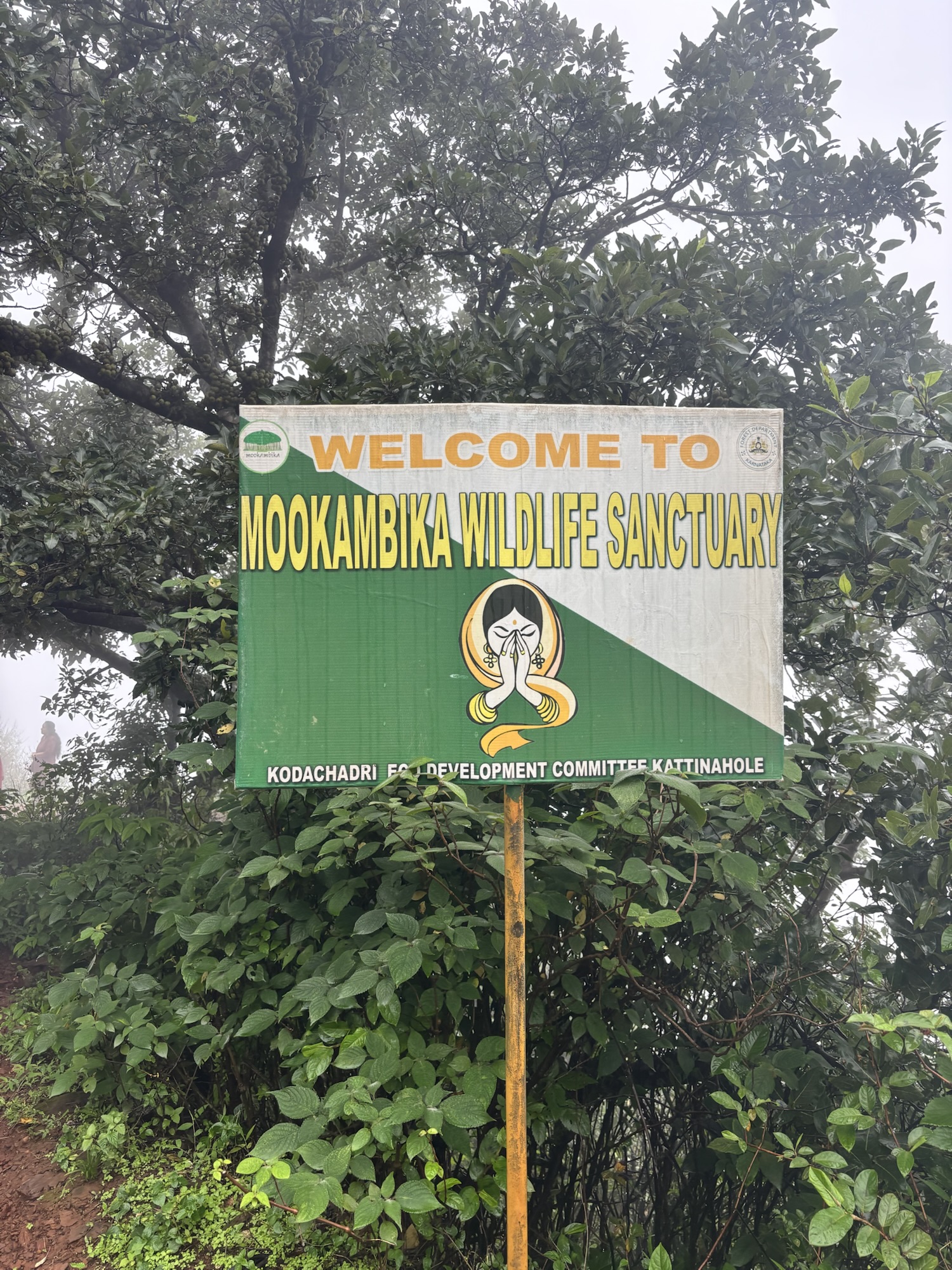
There is a forest checkpost along the way where visitors are requested to leave behind plastic waste. Carry sufficient water with you, as there are no shops or facilities once you enter the reserve. As the jeep bounced its way up the mountain, I was reminded of another journey many years ago – to Neelkanth Mahadev near Rishikesh. Many of India’s most revered temples are not built for lazy dwellers. They are built at a height. Whether it is Neelkanth Mahadev in Uttarakhand, Vaishno Devi in Jammu, Kedarnath, Amarnath, or the sacred shrines tucked away in the Western Ghats, reaching them often requires effort. One has to climb, walk, wait, persevere, and sometimes simply surrender to the terrain.
Perhaps there is wisdom in that. The journey itself becomes part of the pilgrimage. The mountain slows you down. The forest quietens the mind. The physical effort creates space for reflection. By the time you arrive, you are no longer in the same frame of mind with which you began the journey – more flexible, less crowded, and open to receive.
As our jeep climbed higher through the mist-covered forests of Kodachadri, I began thinking about all the journeys I had taken to the heights. Perhaps the gods choose mountaintops for a reason. By the time you reach them, something within you has already begun to change.
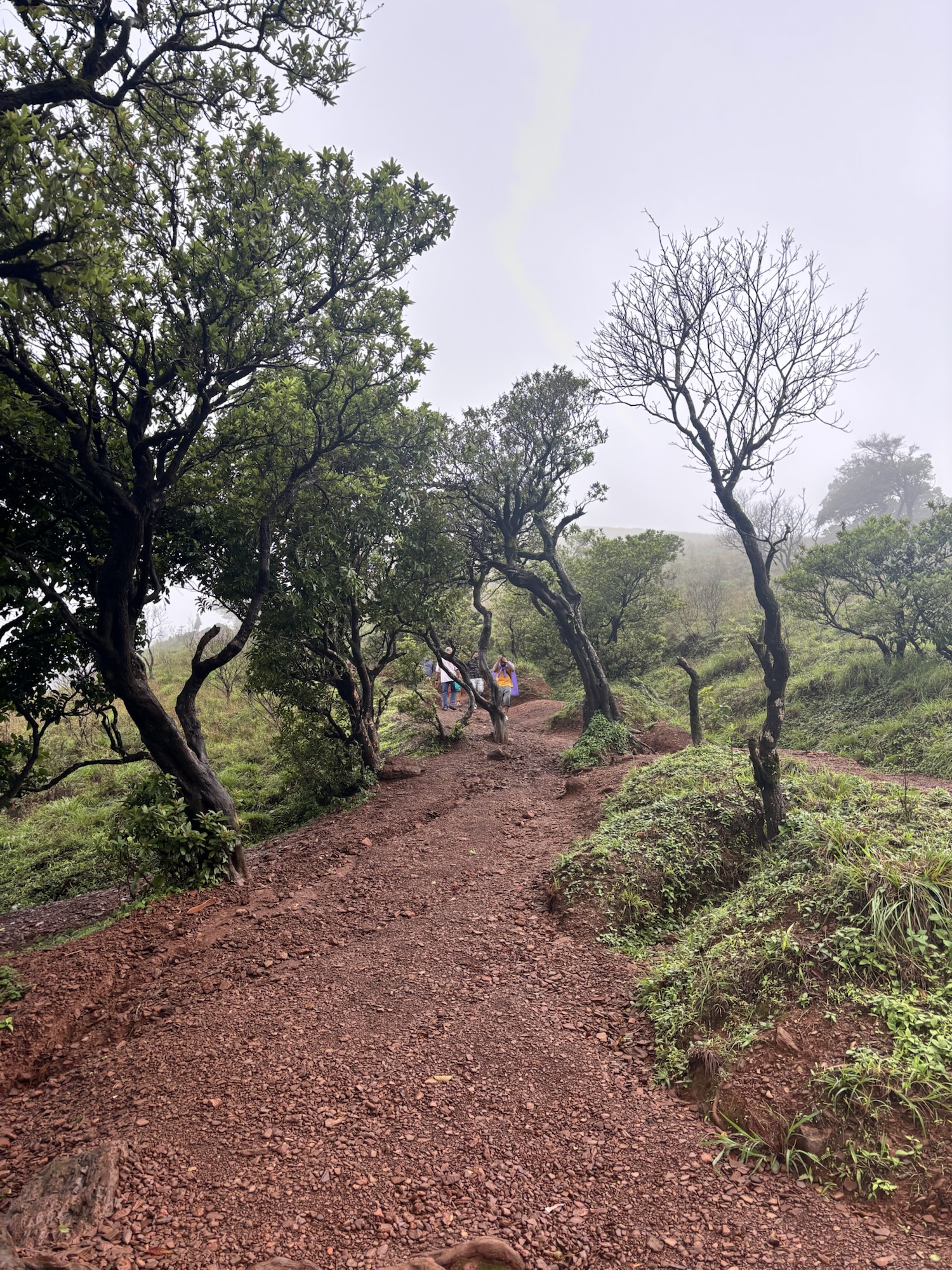
Sarvajna Peetha atop Kodachadri Peak: Spiritual, Scenic & Stunning
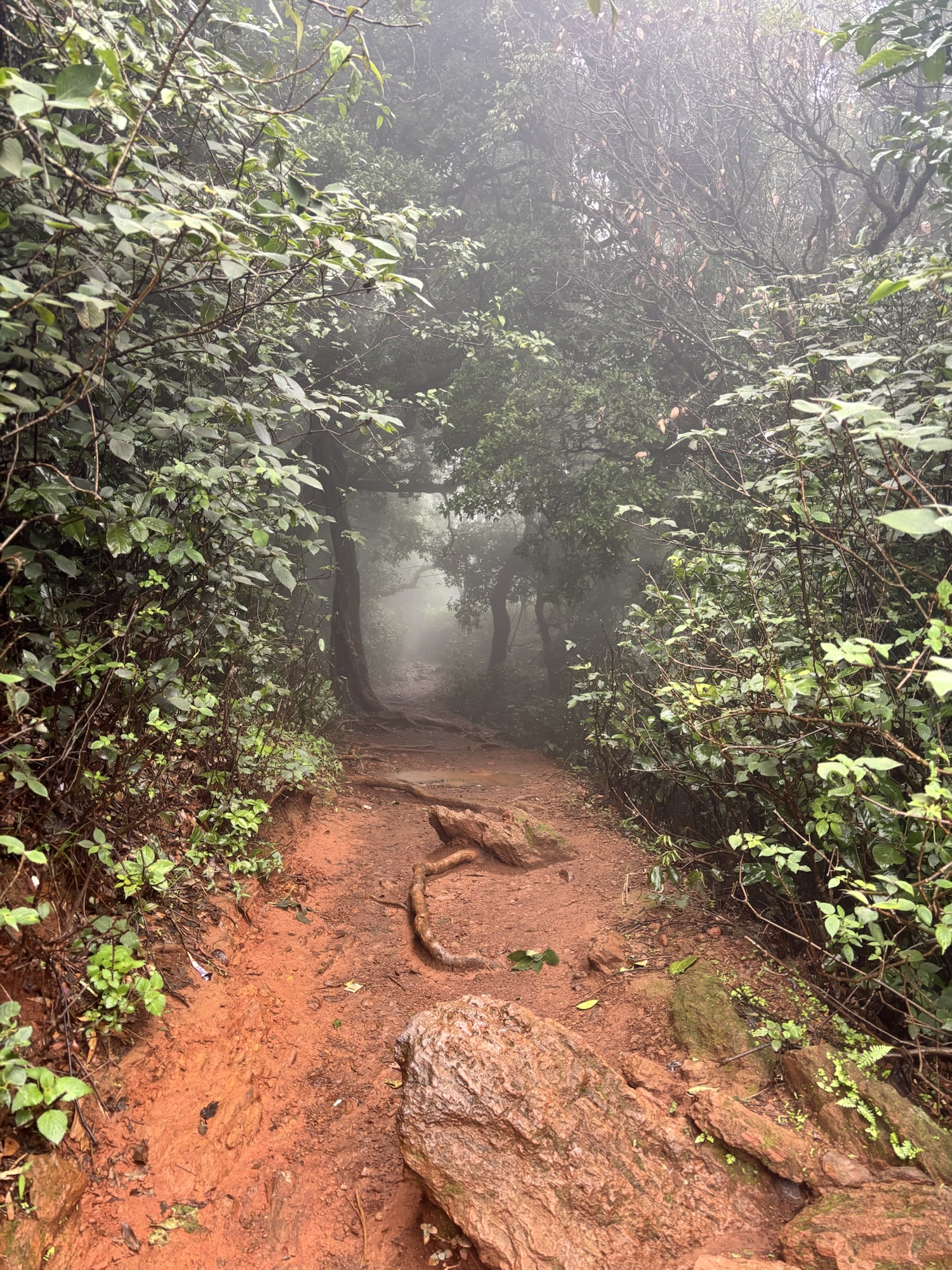
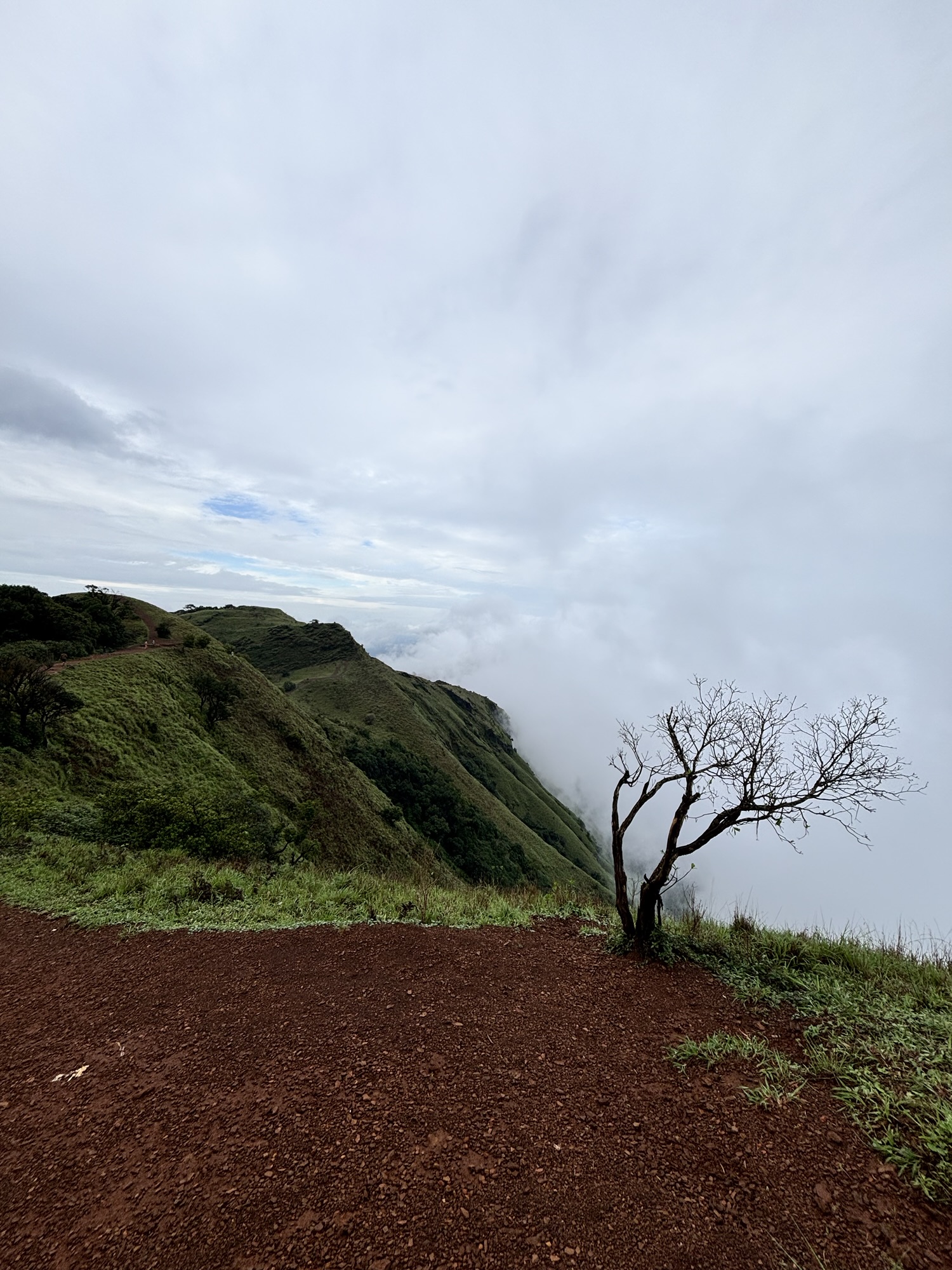
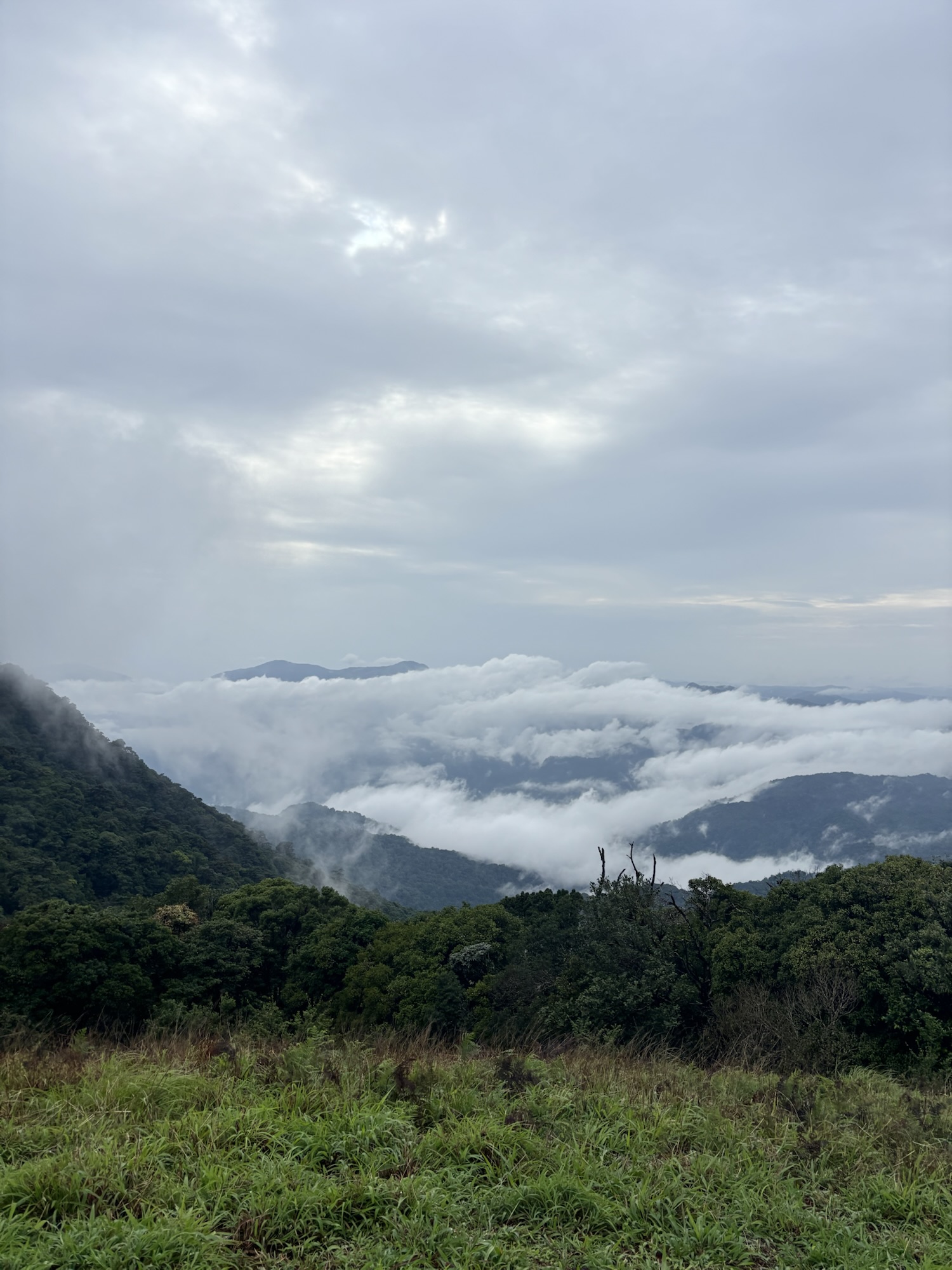
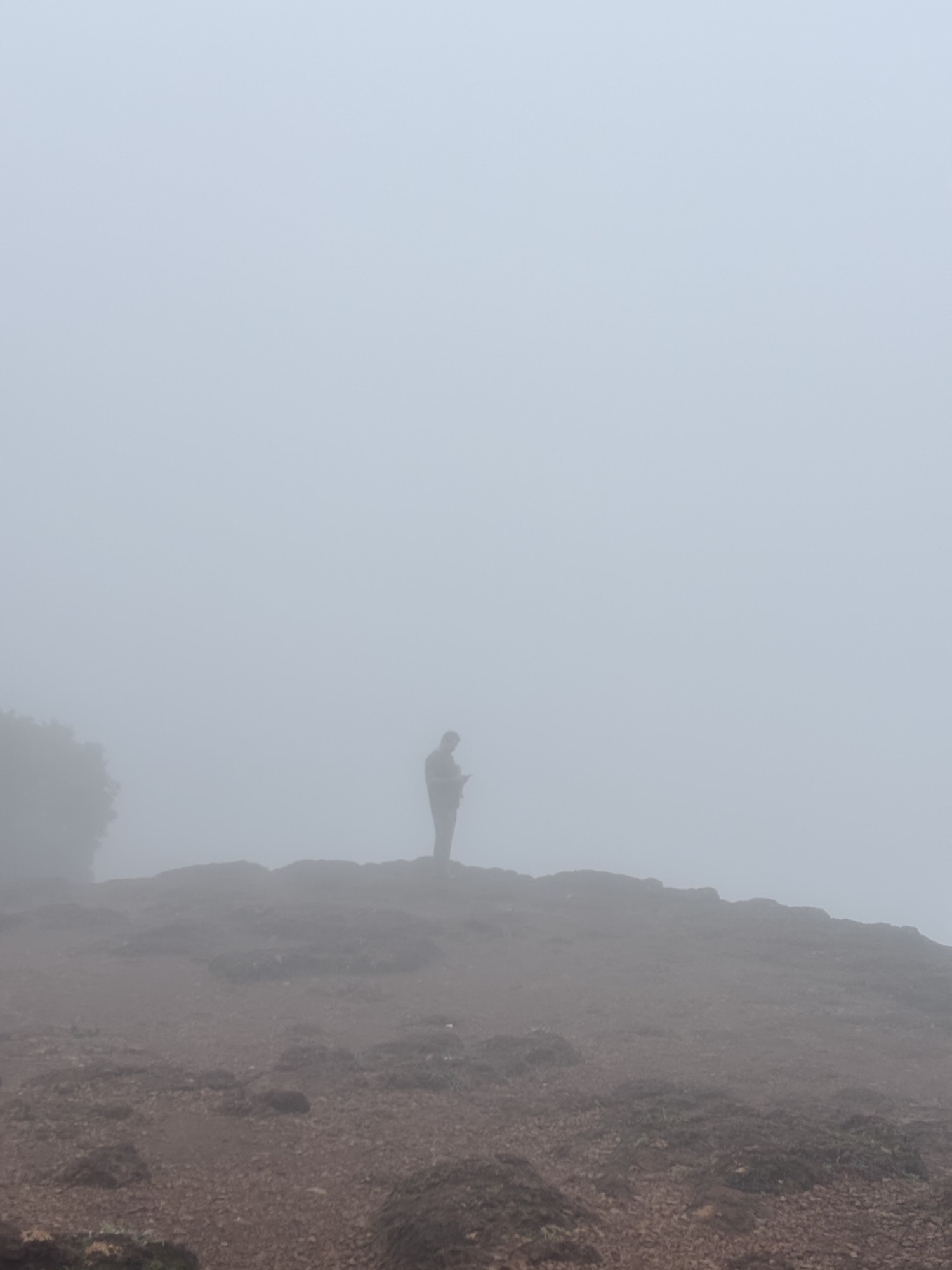
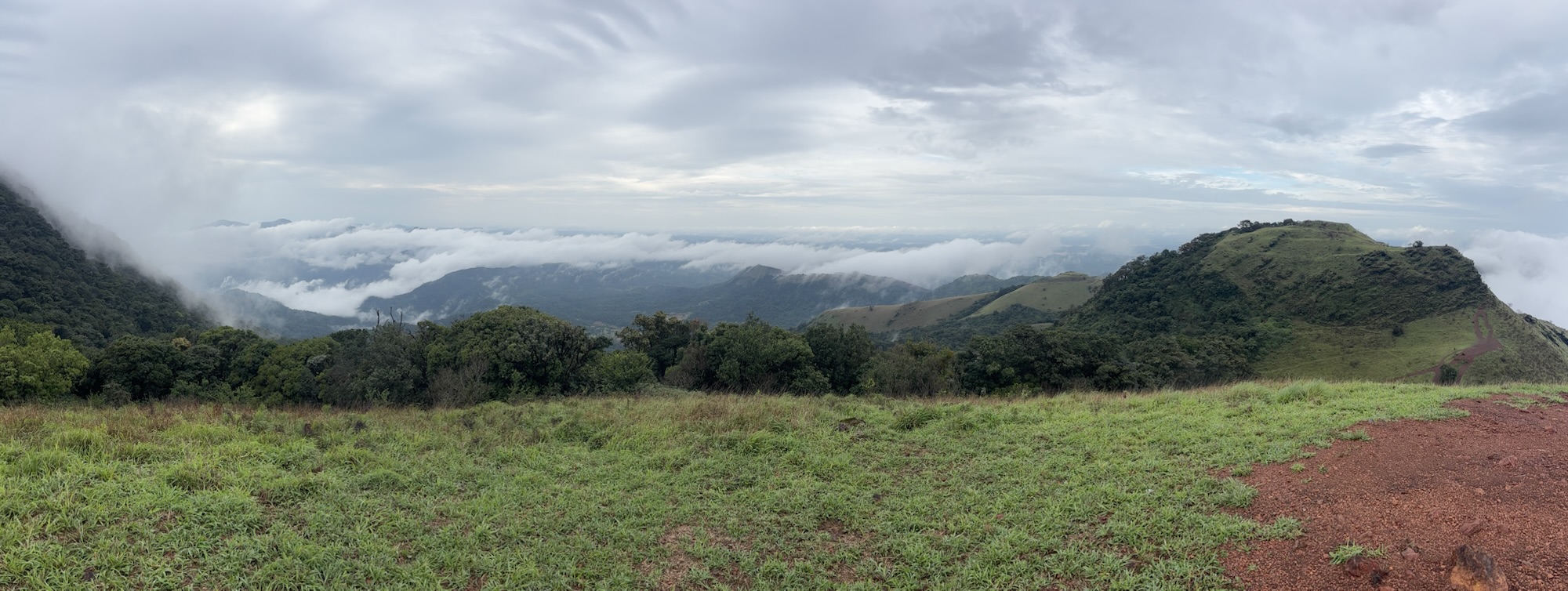
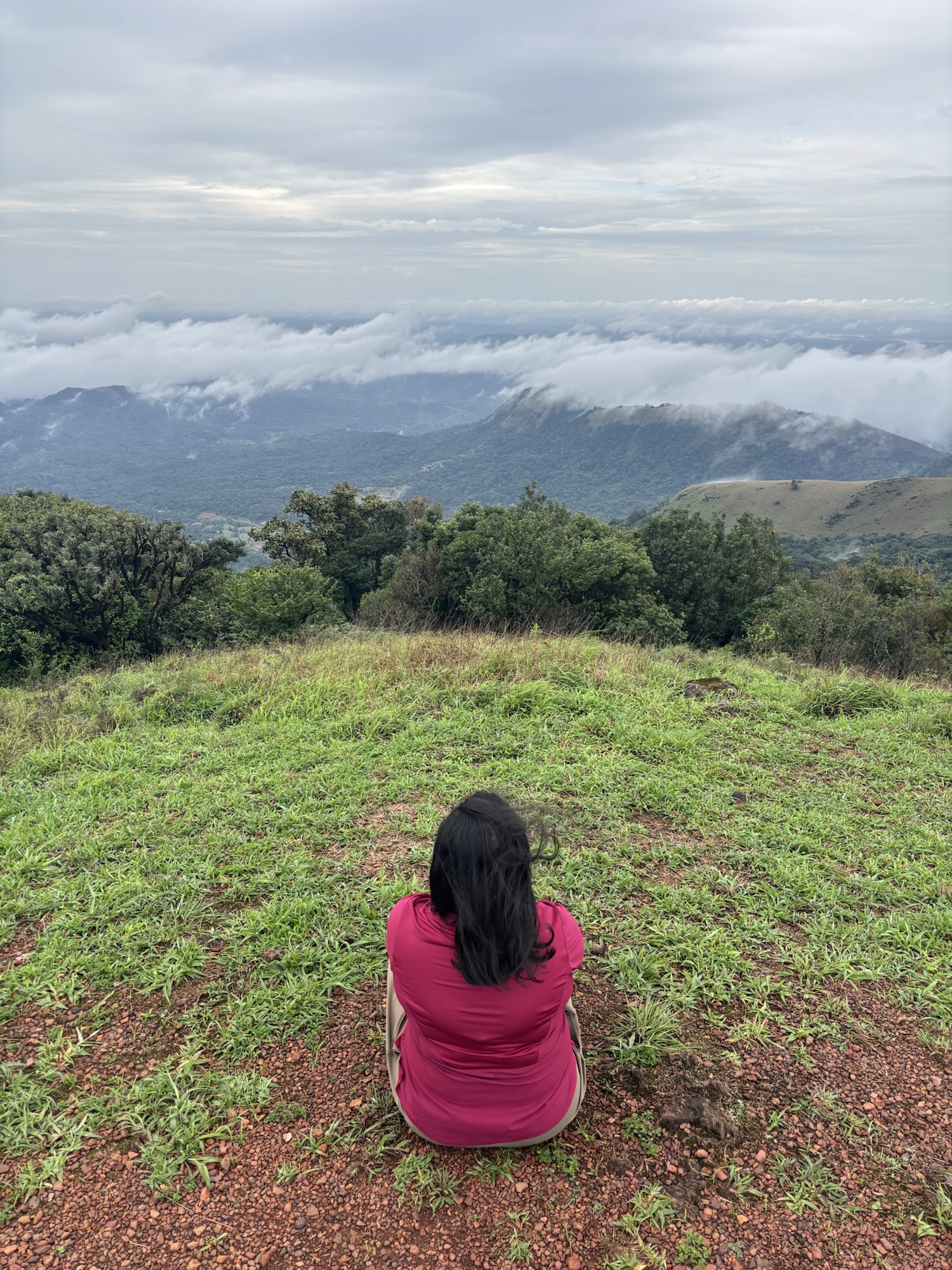
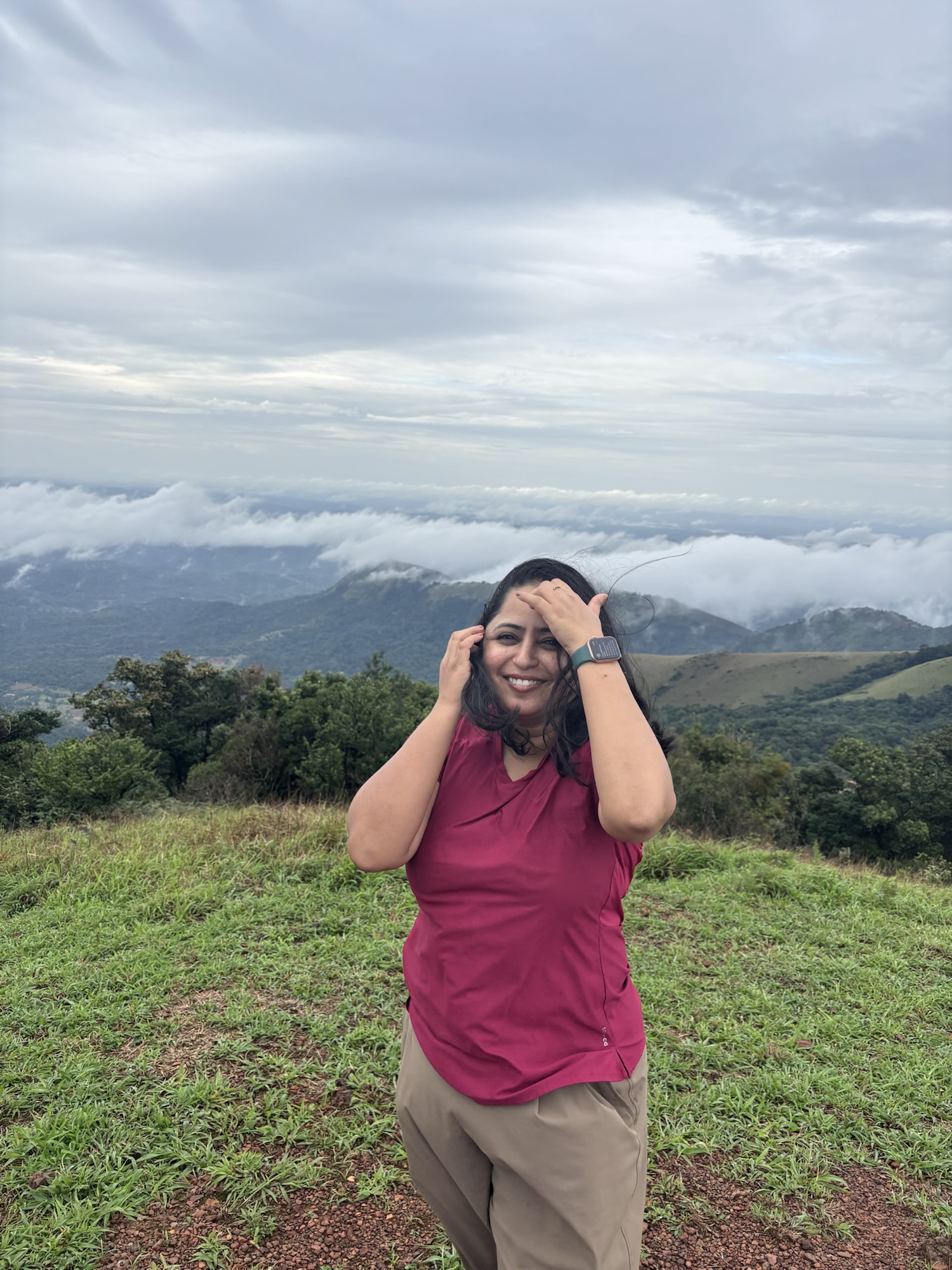
The trek began with boulders, loose stones, and an offbeat trail that gradually opened up to breathtaking views of the Western Ghats and their rolling green grasslands. Since it was the monsoon season, much of the landscape was draped in mist that seemed to have a mind of its own – constantly shifting, swirling, and parting just enough to offer fleeting glimpses of the mountains beyond. Every now and then, the silence would be interrupted by the distant sounds of a waterfall hidden somewhere in the forest, or the call of a bird perched on a nearby tree. The moving mist, the cold breeze, the windswept landscape, and the vastness of the Western Ghats combined to create an experience that felt both grounding and expansive.
Standing there, you can’t help but notice how similar mountains are to life. There are infinite possibilities, difficult stretches, a constant climb, and moments of breathtaking beauty. Yet what we are able to see is often a function of the weather. No two people witness the same landscape, just as no two people experience life in quite the same way. Our view depends on timing, on the external conditions around us, and on what happens to catch our attention in a particular moment. The mountains remain the same. The mist changes. And with it, the view.
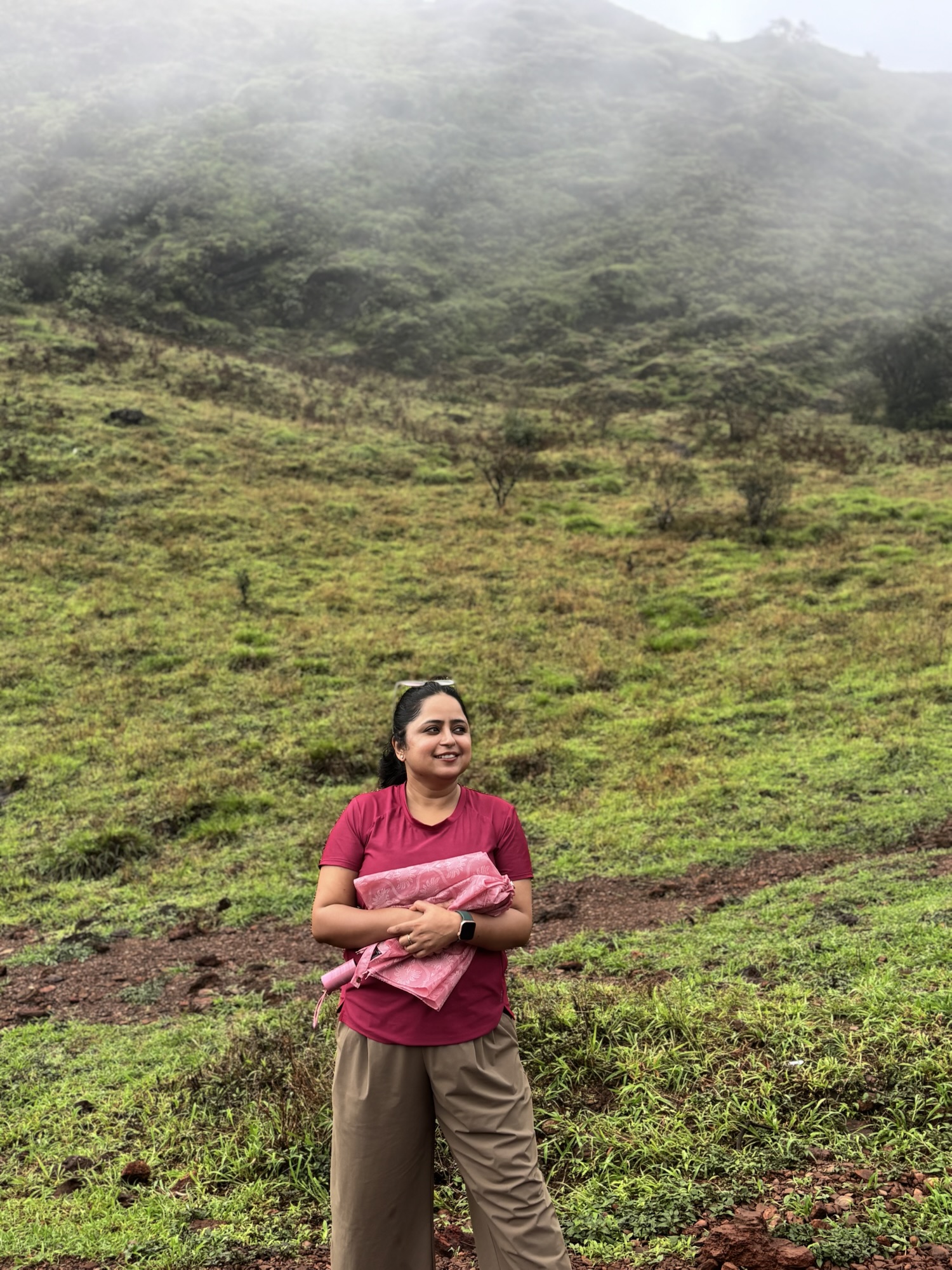
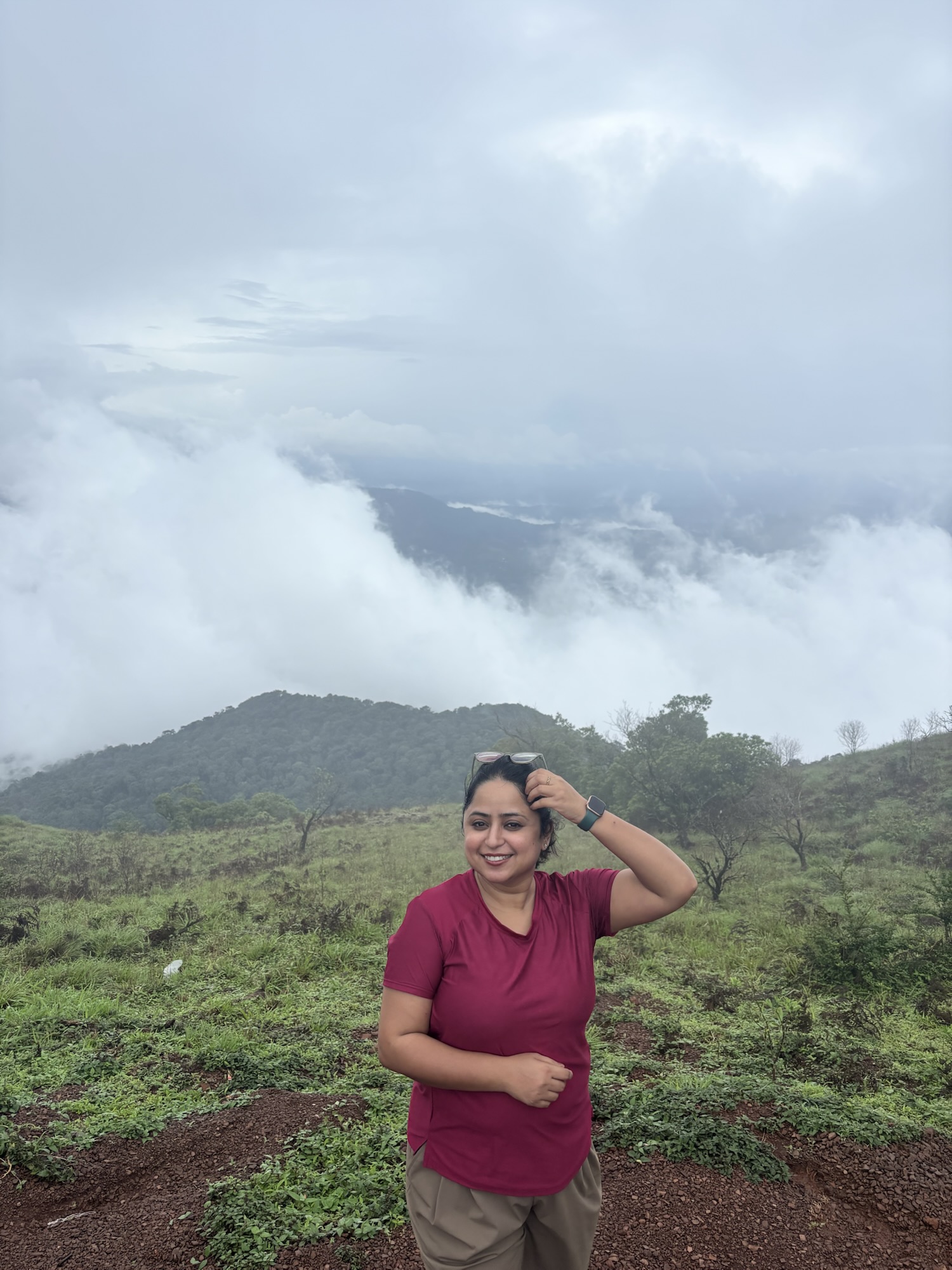
Near the peak: Where Adi Shankaracharya once meditated
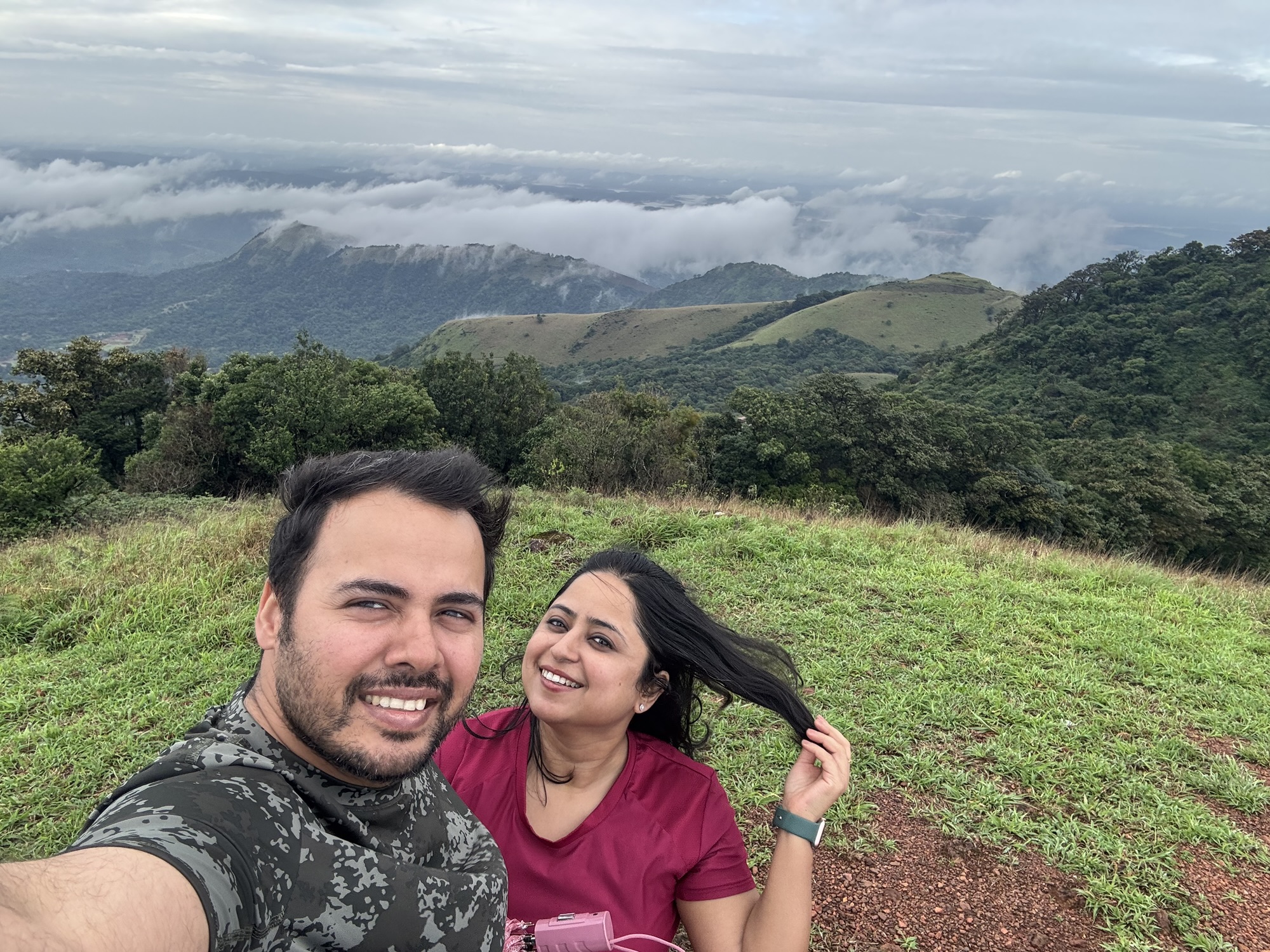
About ten minutes before the peak, I gave up. It was close to 4 p.m., and we knew we had to begin our descent soon. While going downhill is usually easier, the rains, slippery trails, loose stones, and countless boulders promised a different story. I turned to my husband and declared that he was welcome to continue climbing, exploring, and enjoying the summit, but I had reached my limit. I was done. He refused to go ahead without me. And I refused to move ahead. We both paused. He simply stood there, held my hand, and encouraged me to finish the last stretch.
I remained stubborn. I didn’t want to continue. Looking back, I realise that it wasn’t just physical fatigue. I have always had a complicated relationship with finishing things. Sometimes the final stretch feels harder than the entire journey. The mind begins negotiating, rationalising, and convincing you that stopping is perfectly reasonable. But he refused to leave my side. And after a few minutes, something shifted. My body wasn’t significantly stronger. The mountain wasn’t any less steep. The weather hadn’t changed. But my mind had stopped rebelling. The final stretch suddenly seemed possible.
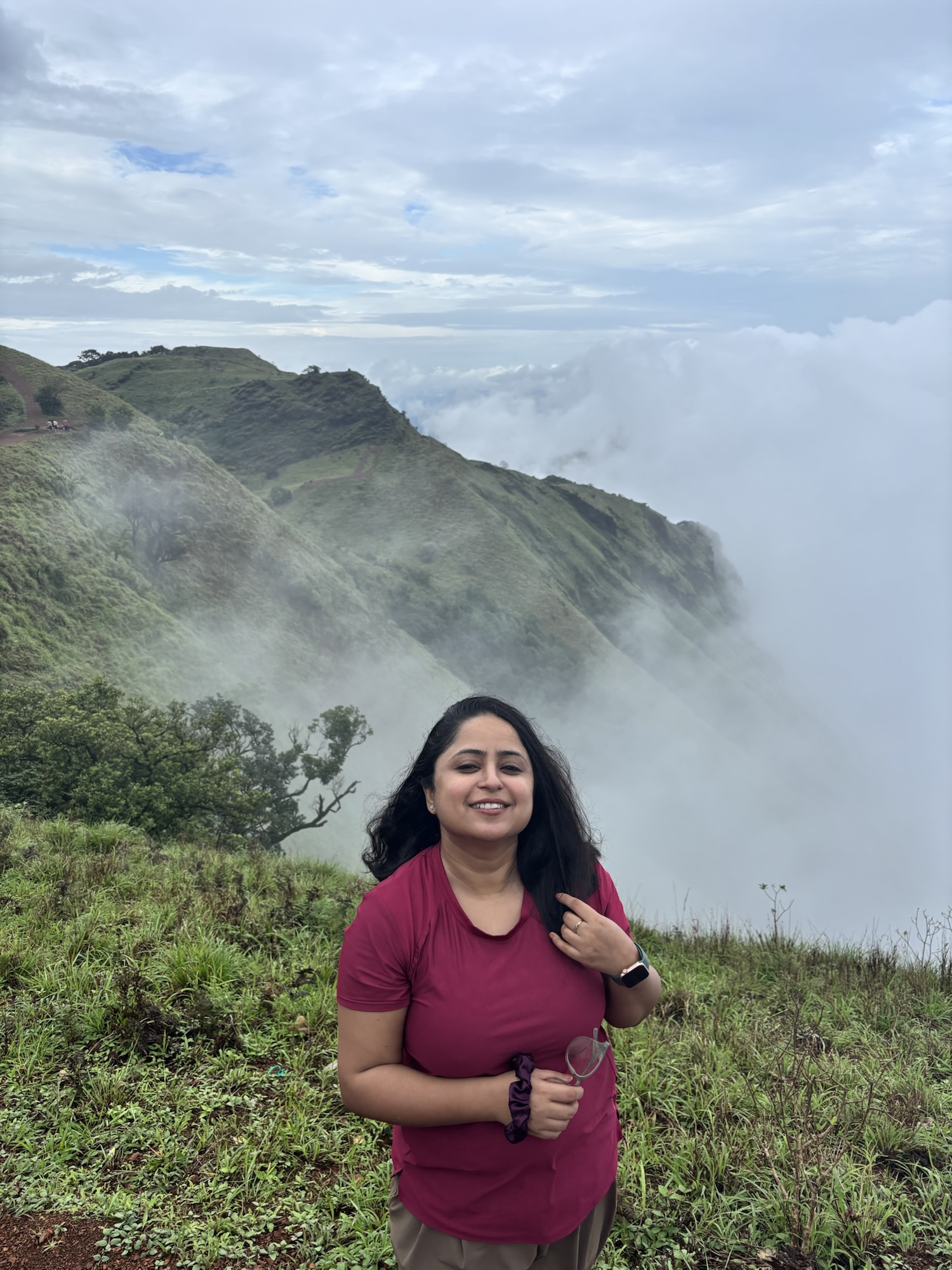
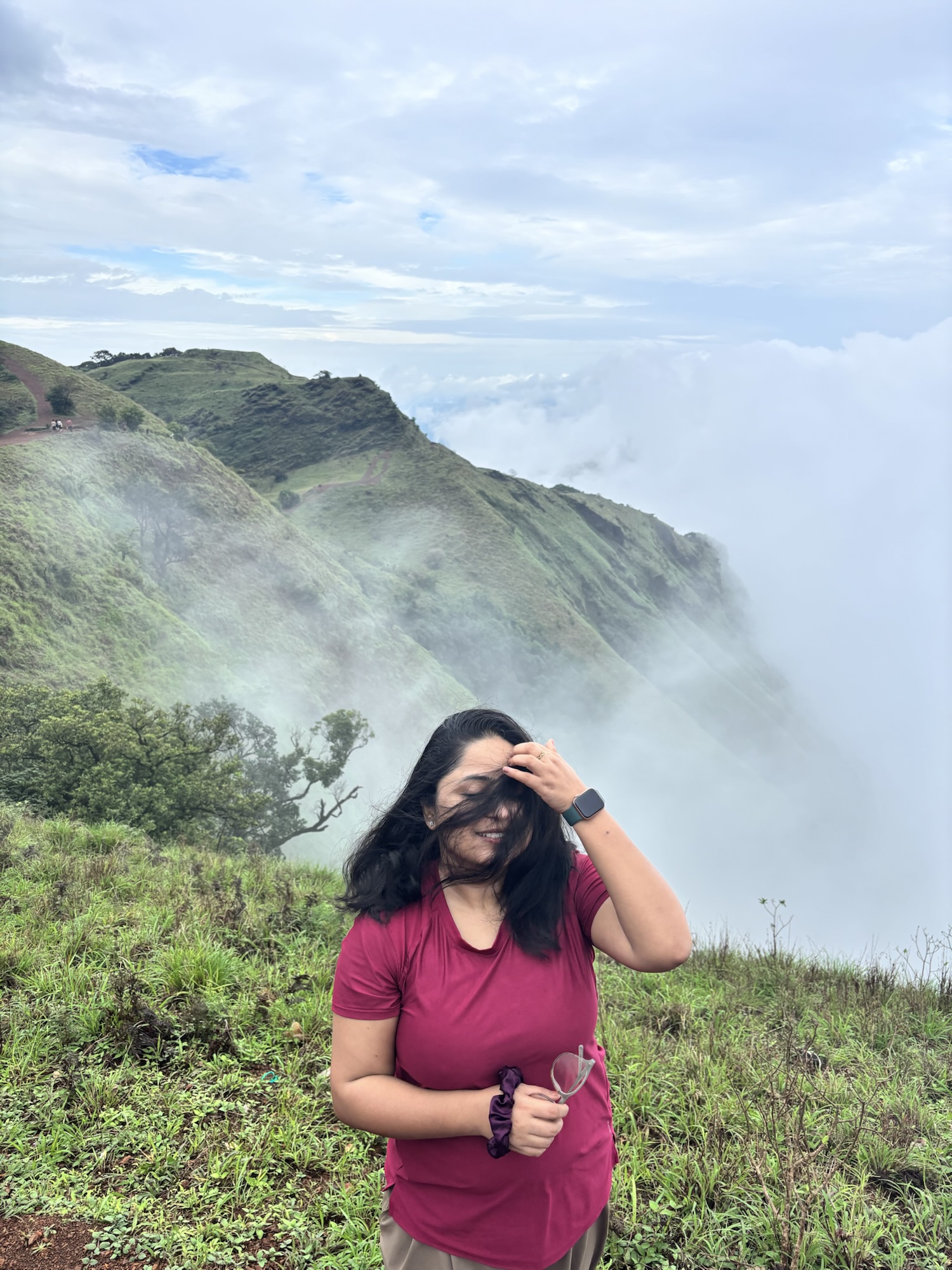
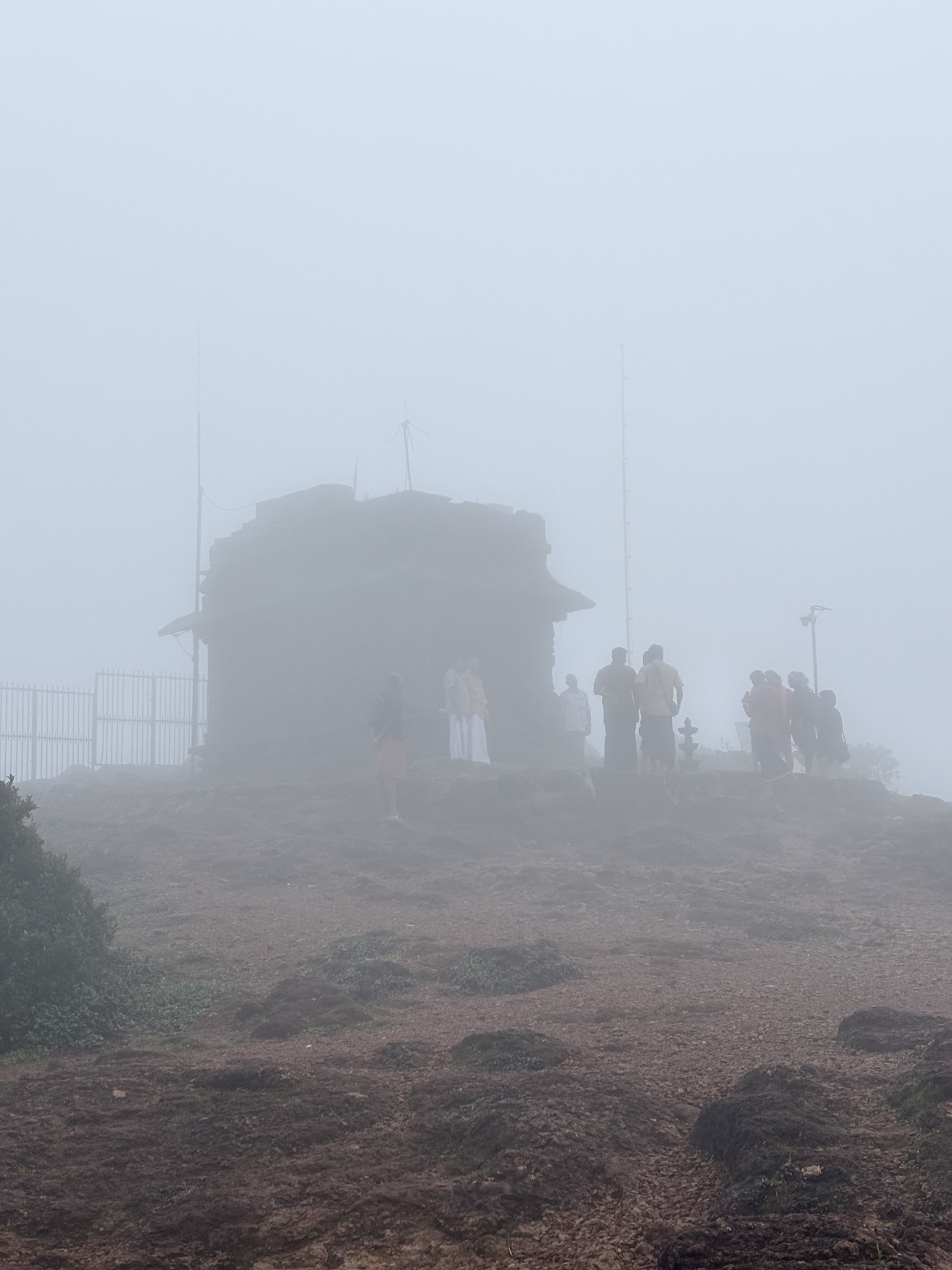
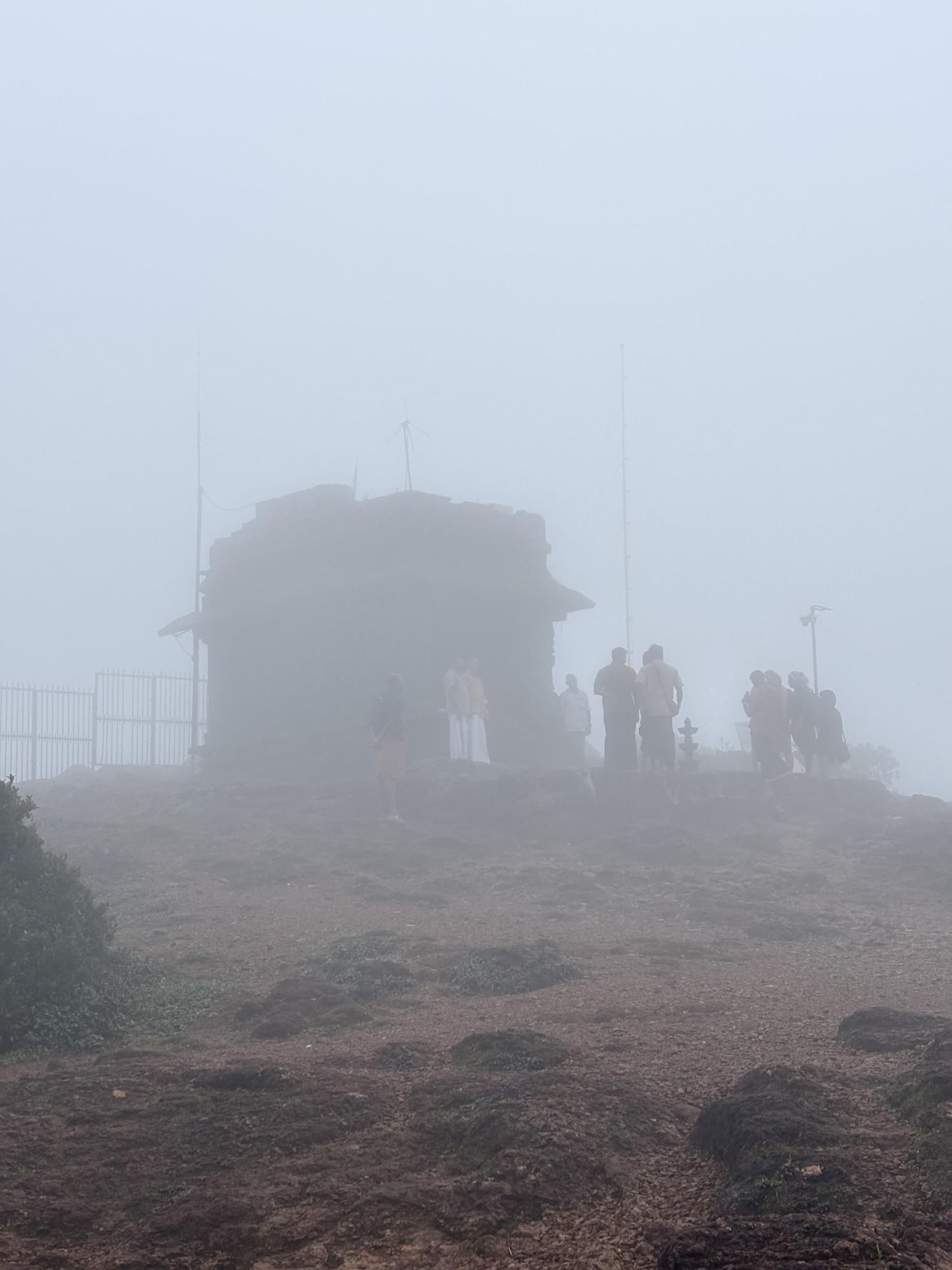
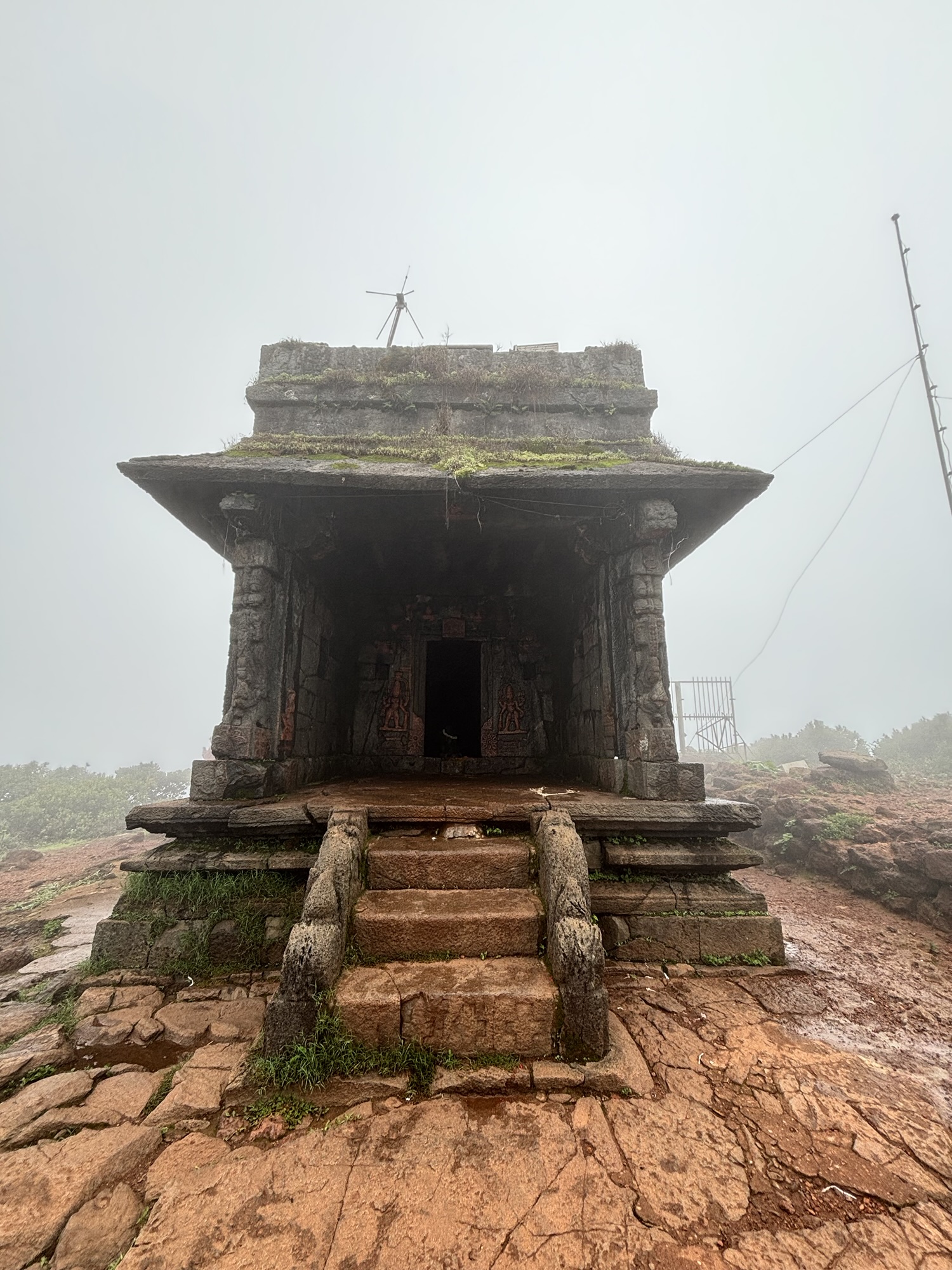
Within fifteen minutes, we reached the summit and stood before the ancient site where Adi Shankaracharya is believed to have performed tapas, now marked by a small stone shrine overlooking the vast expanse of the Western Ghats. Life is no different. We set goals. We commit to difficult journeys. We begin with enthusiasm. And then somewhere near the finish line, the mind starts working against us. It creates doubt. It magnifies discomfort. It offers perfectly logical reasons to quit. The mind plays these tricks on everyone.
And on some days, we are not enough by ourselves. We need someone who lends us their belief when ours begins to waver. Someone who stays beside us when we are ready to walk away. Someone who quietly reminds us why we started. Perhaps that is one of life’s greatest blessings, not strength, talent, or success, but the presence of people who refuse to let us give up on ourselves.
Protect those relationships. Cherish those people. Love them well. On the days when your own batteries run low, they become the strength that carries you through the final stretch.
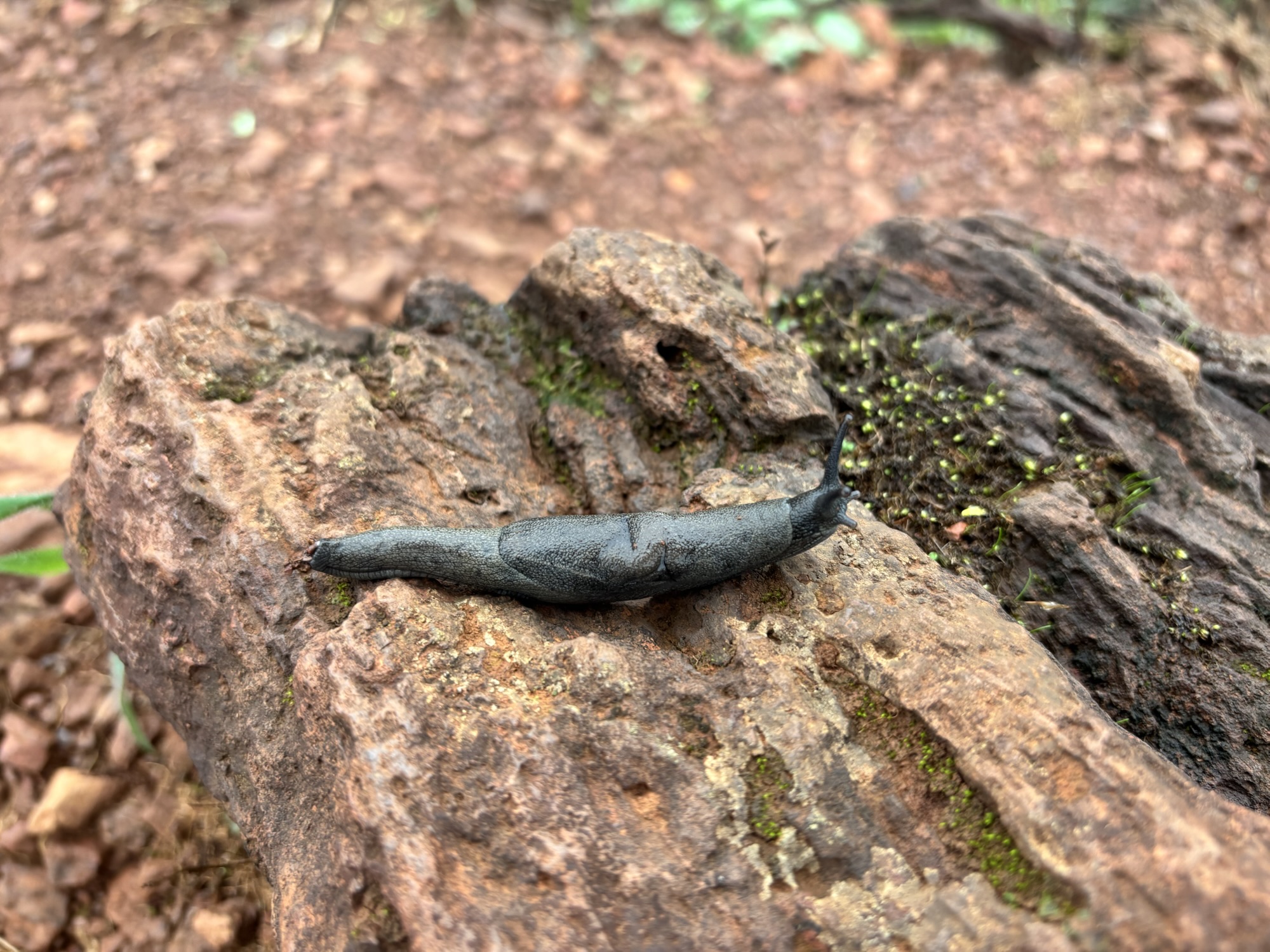
Inside the Shrine
Some places are highly charged, full of pulsating energy, and you can feel it as soon as you reach there. This place felt like that. A small shrine, but vibrating with waves of energy that seemed to fill you up from within. I spent a few minutes there, bowed my head in devotion, and left feeling as if I had accomplished something that I hadn’t even set out to find.
Until the day before, I wasn’t even aware of this place. And there I was, inside the shrine, at a site considered sacred and deeply connected to Mookambika Devi. Later, in Kudremukh, locals told me that the place is extremely powerful. Of course, they are believers. And perhaps I am too. But sometimes life’s chance encounters make you realise that there is a bigger power than you in motion, quietly making things happen without your knowing. Whether you call it faith, grace, destiny, or simply coincidence, some experiences leave you with the feeling that you were meant to be there all along.
Trekking back through new trails
After the darshan, we began our descent. It had started raining lightly, and the winds were blowing harder than before. My mind felt lighter, and strangely, so did my body. Only my feet seemed aware of the slippery trails and uneven rocks beneath them.
The forest had its own music. The sound of the wind weaving through the trees, the occasional call of a bird, and the rustling of leaves accompanied us on the way down. Everything else was silent. Descending was trickier than the climb. I held on to guardrails, sturdy rocks, and tree branches, taking each step carefully. Along the way, we crossed many fellow travellers – some returning after their darshan, others making their way towards the summit. Belief looked different on different people.
Some walked with determination, some with excitement, some in silence, and some simply curious about what lay ahead. Yet all of us were walking the same path. Perhaps that is the nature of faith. It rarely looks the same from the outside.
And then again, it is not always what is visible on the outside that matters. What influences us far more is what is happening within – the thoughts we carry, the meaning we attach to our experiences, and the quiet transformations that no one else can see.
Planning your visit: a few practical tips
Kodachadri is located within the Mookambika Forest Reserve in Karnataka and is most commonly accessed from the Kollur side. Local jeeps are available to take visitors to the trek starting point through the forest reserve. There is a forest checkpost along the route where visitors are required to leave behind plastic waste, so carry only essentials and help preserve the beauty of this remarkable ecosystem.
If you are visiting during the monsoons, be prepared for slippery trails, strong winds, and rapidly changing weather conditions. Good trekking shoes, a light rain jacket, drinking water, and a small backpack are highly recommended. The jeep ride to the base of the trek is an adventure in itself, navigating water-filled tracks, boulders, and sharp bends. If you are prone to motion sickness, consider having a light meal before the journey. Start early enough to comfortably complete the ascent and descent before dusk, take your time on the slippery sections, and leave the mountain exactly as you found it – for the next traveller, and for the forest itself.

